EN
EN  ES
ES  FR
FR  DE
DE  IT
IT  KO
KO  JA
JA  ZH
ZH  AR
AR  PT
PT  TR
TR  PL
PL  ID
ID  VI
VI How to Sell Handmade Products Online and Grow Your Business

Turning your passion for crafting into a business can be exciting, but figuring out how to sell your handmade products online can feel a bit overwhelming. Whether you’ve been selling at craft fairs or are just starting to explore the online world, this guide will help you navigate the essential steps.
From picking the right platform to mastering product photography and marketing strategies, we’ll walk you through everything you need to know to get your handmade business online and thriving. Ready to turn your hobby into a successful online store? Let’s dive in.
Why Sell Handmade Products Online?
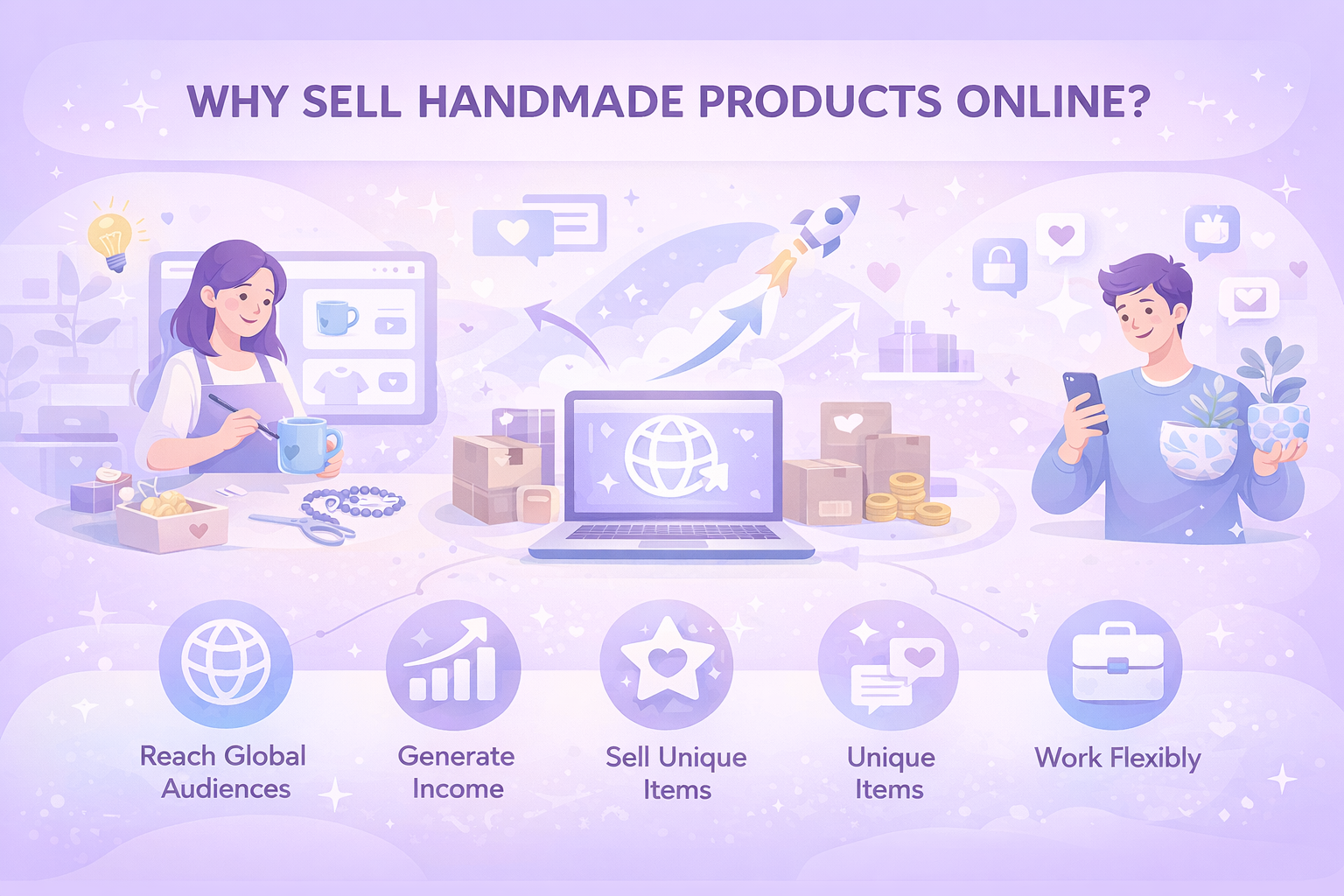
Selling handmade products online offers creators the opportunity to transform their passion into a profitable business. It allows you to share your unique creations with a global audience, turning your hobby into a sustainable income source. The online marketplace is growing rapidly, with consumers increasingly seeking out personalized, one-of-a-kind items that can’t be found in stores. Whether you’re looking to build a side hustle or turn your craft into a full-time business, the online space provides endless possibilities.
Benefits of Selling Handmade Products Online
Selling handmade products online comes with a variety of advantages that can help grow your business. Here are some key benefits:
- Wider reach: Your online shop is accessible 24/7, allowing you to connect with a global audience and attract buyers who might never have found your work in person.
- Lower overhead costs: Without the need for a physical storefront, you can save on rent and utilities.
- Flexibility: Running your business online lets you work from anywhere, whether you’re at home, on the go, or traveling, offering you freedom and convenience.
- Scalability: As your business grows, you can add more products, expand to new platforms, and invest in marketing with minimal effort.

How to Sell Handmade Products Online
Now that you understand the importance and benefits of selling handmade products online, let’s dive into the practical steps to get started. From choosing the right platform to optimizing your listings and marketing strategies, we’ll walk you through the process to help your handmade business thrive.
1. Choose the Right Platform to Sell Your Handmade Products
Choosing the right platform is essential for selling your handmade products online. The platform you pick will affect how you manage your business and interact with customers. Consider factors like ease of use, customization options, and the type of audience you want to reach. Whether you want to sell on a marketplace or create your own website, each option has its advantages depending on your goals.
2. Set Up Your Online Store
Once you’ve chosen your platform, it’s time to set up your online store. Here are some key considerations to keep in mind:
Create a Memorable Brand Name
Your brand name should reflect your style and be easy to remember. Consider using something personal, like your name or a nickname, or draw inspiration from your craft. Make sure the name is available as a domain and across social media platforms.
Buy Your Domain Name
Even if you’re selling on e-commerce platforms, it’s a good idea to secure your own domain name. This will help you maintain control of your brand identity and provide a more professional appearance. Use domain name tools to find one that matches your brand.
Design Your Storefront
Your storefront should reflect your brand’s personality. Ensure your shop is visually appealing and easy to navigate. High-quality images and a consistent color scheme can make a big difference.
Optimize Product Listings
Product listings are your chance to showcase your handmade items. Here’s what to include:
- High-quality photos: Use well-lit, clear images that show your product from different angles. Include close-ups to highlight unique details and features.
- Detailed descriptions: Write descriptions that tell a story about your product. Include details such as materials, size, color options, and the inspiration behind the piece.
- Pricing: Make sure your pricing reflects both the cost of materials and your time. Research similar products to ensure your prices are competitive but fair.
3. Market Your Handmade Products
Marketing is essential to the success of your online business. Without customers, your products won’t sell, no matter how amazing they are. Here are some key marketing strategies to consider:
Utilize Social Media
Instagram is a visual platform, making it perfect for showcasing handmade products. Post regularly with high-quality photos of your products, behind-the-scenes content, and customer testimonials.
Pinterest is another great platform for promoting handmade products. Create visually appealing boards to showcase your products, and link back to your online store.
Create also a Facebook page for your business where you can engage with customers, post updates, and sell directly through Facebook Marketplace.
Leverage Email Marketing
Building an email list allows you to keep in touch with your customers, offer promotions, and announce new products. Offer incentives such as discounts or free shipping for people who sign up for your newsletter. Make sure to send out regular updates and personalized offers to keep your audience engaged.
Collaborate with Influencers
Consider partnering with influencers in your niche who can help promote your products to a wider audience. Look for influencers whose followers align with your target market and who have a genuine interest in handmade goods.
Optimize for SEO
Search engine optimization (SEO) is critical for getting found online. Make sure to use relevant keywords in your product titles, descriptions, and tags. This will help your listings appear in search results when potential customers are looking for products like yours. Additionally, consider writing blog posts or creating content related to your niche to drive organic traffic to your site.
4. Offer Exceptional Customer Service
To build strong relationships with your customers and encourage repeat business, excellent customer service is key. Here are a few ways to ensure your customers feel valued:
- Respond promptly to inquiries: Make sure to address customer questions and concerns quickly, whether they’re asking about product details or shipping times. Handle issues professionally: Whether it’s a shipping delay or a product defect, always approach the issue calmly, professionally, and with a focus on resolution.
- Offer clear shipping and return policies: Be upfront about shipping times, return policies, and exchanges. Providing transparency in these areas helps customers feel confident in their purchase and builds trust.
5. Manage Inventory and Orders Efficiently
As your business grows, it becomes increasingly important to manage your inventory and orders efficiently. Consider using inventory management software or tools provided by your platform to track stock levels and streamline the order fulfillment process.
Set Up an Efficient Shipping System
Decide whether you will ship domestically or internationally and choose the best carriers based on your needs. Make sure to factor in shipping costs when pricing your products, and offer tracking information to customers once their orders have shipped.
Automate Where Possible
To save time and reduce errors, consider automating aspects of your business. Many platforms offer tools to automate inventory updates, customer emails, and order fulfillment.

6. Use WisePPC to Optimize Your Sales Strategy
As a business selling handmade products online, leveraging the right tools can make all the difference, and that’s where we come in. We’re WisePPC, a powerful analytics platform designed to help businesses like yours maximize their marketplace presence, especially on Amazon and Shopify. Our suite of advanced features provides you with the insights you need to optimize your sales and advertising efforts in real-time.
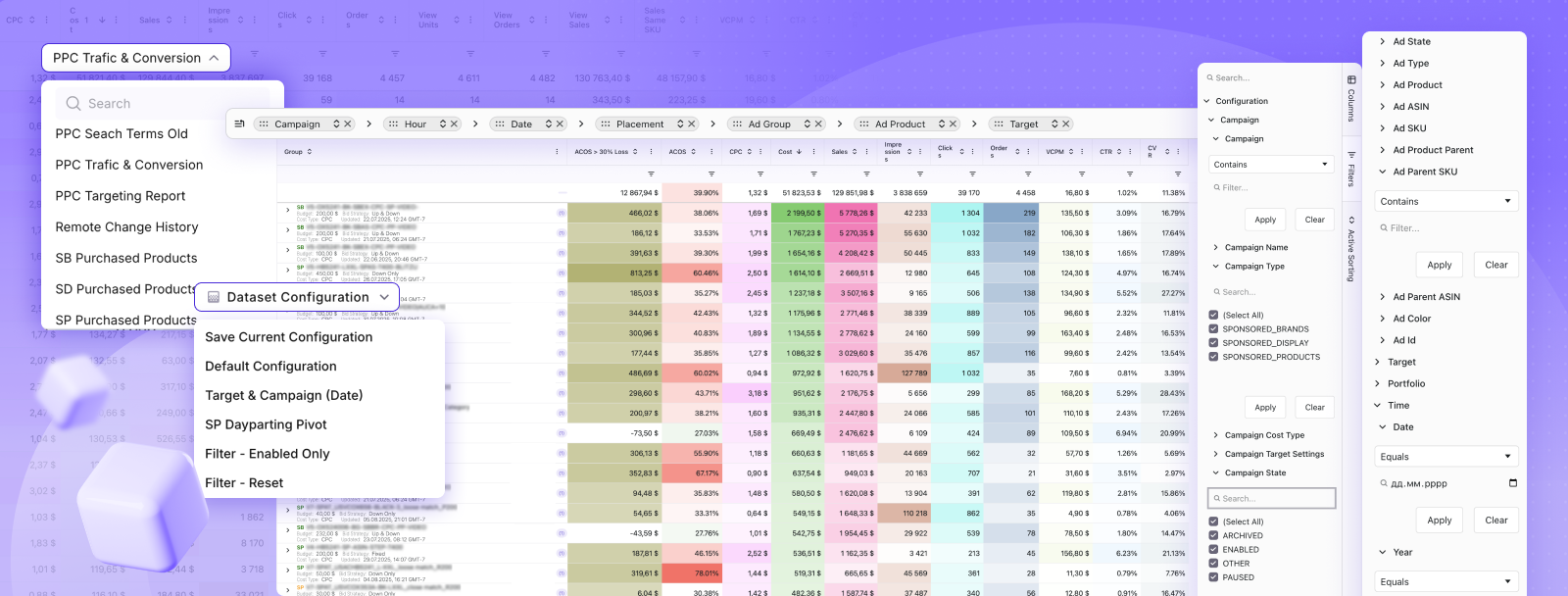
Whether you’re selling on one platform or managing multiple sales channels, we give you the ability to track numerous key metrics, monitor performance, and adjust campaigns with ease. With features like bulk updates, advanced filtering, and historical data tracking, we help streamline your processes, spot trends, and make smarter, data-driven decisions. This way, you can focus on what truly matters – growing your business – while we handle the time-consuming tasks.
By integrating us into your strategy, you can ensure that your handmade products reach the right audience, at the right time, and with the right approach. Our tools will help you identify underperforming areas and provide actionable insights to improve your ads and sales tactics. With us, you can confidently scale your business, ensuring that your creative vision continues to drive results.
Conclusion
Selling handmade products online can be a fulfilling and profitable endeavor when approached strategically. By choosing the right platform, setting up an engaging store, implementing effective marketing strategies, and providing top-notch customer service, you can turn your creative hobby into a thriving business. Stay consistent, keep learning, and adapt to market trends as you grow, and your handmade business can flourish online.
FAQ
1. How do I choose the best platform to sell my handmade products online?
Choosing the right platform depends on your goals and the type of products you’re selling. Don’t be afraid to sell on multiple platforms to reach different audiences – just make sure you’re able to manage it all!
2. How do I photograph my handmade products to make them stand out?
Good product photography can really elevate your sales. Use natural light when possible, and consider investing in a lightbox for smaller items. Take photos from multiple angles to show off all the details, and include a shot that shows the product in use or in a lifestyle setting. The more clearly you can show your product, the better it’ll sell.
3. Can I sell handmade products on social media platforms?
Absolutely! You can post pictures of your creations, engage with your audience, and even facilitate sales. Social media allows you to showcase your creative process and connect with a loyal following.
4. How should I price my handmade products?
Pricing your products can be tricky, but it’s important to find a balance. Start by calculating the cost of materials and factoring in the time it takes to create each item. Then, research similar products to get an idea of what the market will bear. Don’t forget to include shipping costs and platform fees in your pricing to ensure you’re covering all expenses and making a profit.
5. What do I need to set up my handmade business legally?
Before you start selling, you’ll need to choose a business structure – whether it’s a sole proprietorship, partnership, or LLC – and register your business. You may also need an EIN (Employer Identification Number) for tax purposes, even if you’re working solo. Depending on your location, you might need specific licenses or permits, so it’s important to check with your local government to make sure you’re fully compliant.
6. How can I increase traffic to my online store?
To drive more traffic, you’ll want to use a combination of social media marketing, search engine optimization (SEO), and paid ads. Post regularly on platforms like Instagram, Pinterest, and Facebook to engage with your followers. Use SEO tactics, like including relevant keywords in your product descriptions and titles, to help people find your products through search engines. And consider running ads on social platforms or Google to target potential customers directly.
7. How do I manage customer service for my handmade business?
Good customer service is key to keeping customers happy and coming back. Be prompt in responding to inquiries and issues, and always aim for transparency in your communication – whether it’s about shipping times, product details, or returns. A simple, positive interaction can turn a one-time buyer into a loyal customer.
Join the WisePPC Beta and Get Exclusive Access Benefits
WisePPC is now in beta — and we’re inviting a limited number of early users to join. As a beta tester, you'll get free access, lifetime perks, and a chance to help shape the product — from an Amazon Ads Verified Partner you can trust.
 No credit card required
Free in beta and free extra month free after release
25% off for life — limited beta offer
Access metrics Amazon Ads won’t show you
Be part of shaping the product with your feedback
No credit card required
Free in beta and free extra month free after release
25% off for life — limited beta offer
Access metrics Amazon Ads won’t show you
Be part of shaping the product with your feedback