EN
EN  ES
ES  FR
FR  DE
DE  IT
IT  KO
KO  JA
JA  ZH
ZH  AR
AR  PT
PT  TR
TR  PL
PL Is Amazon FBA Worth It? A Comprehensive Guide for E-Commerce Sellers

If you’re thinking about diving into e-commerce, you’ve probably heard of Amazon FBA (Fulfillment by Amazon). But is it really the golden ticket to growing your business, or are there hidden drawbacks you should be aware of? In this article, we’ll break down the key advantages and challenges of using Amazon FBA to help you decide if it’s the right fit for your business goals. Whether you’re just starting out or looking to scale, we’ll help you make an informed decision.
What Is Amazon FBA?
Amazon FBA is a service provided by Amazon where third-party sellers can store their products in Amazon’s fulfillment centers. Amazon handles everything from warehousing and packing to shipping, returns, and customer service. The main selling point is that it allows sellers to leverage Amazon’s logistics network to reach millions of customers, though international sellers still face local fulfillment challenges.
When you use FBA, your products become eligible for Amazon Prime, which means they can be shipped to customers with the fast, free delivery that Prime members love. This can be a huge advantage in terms of attracting customers and increasing sales.
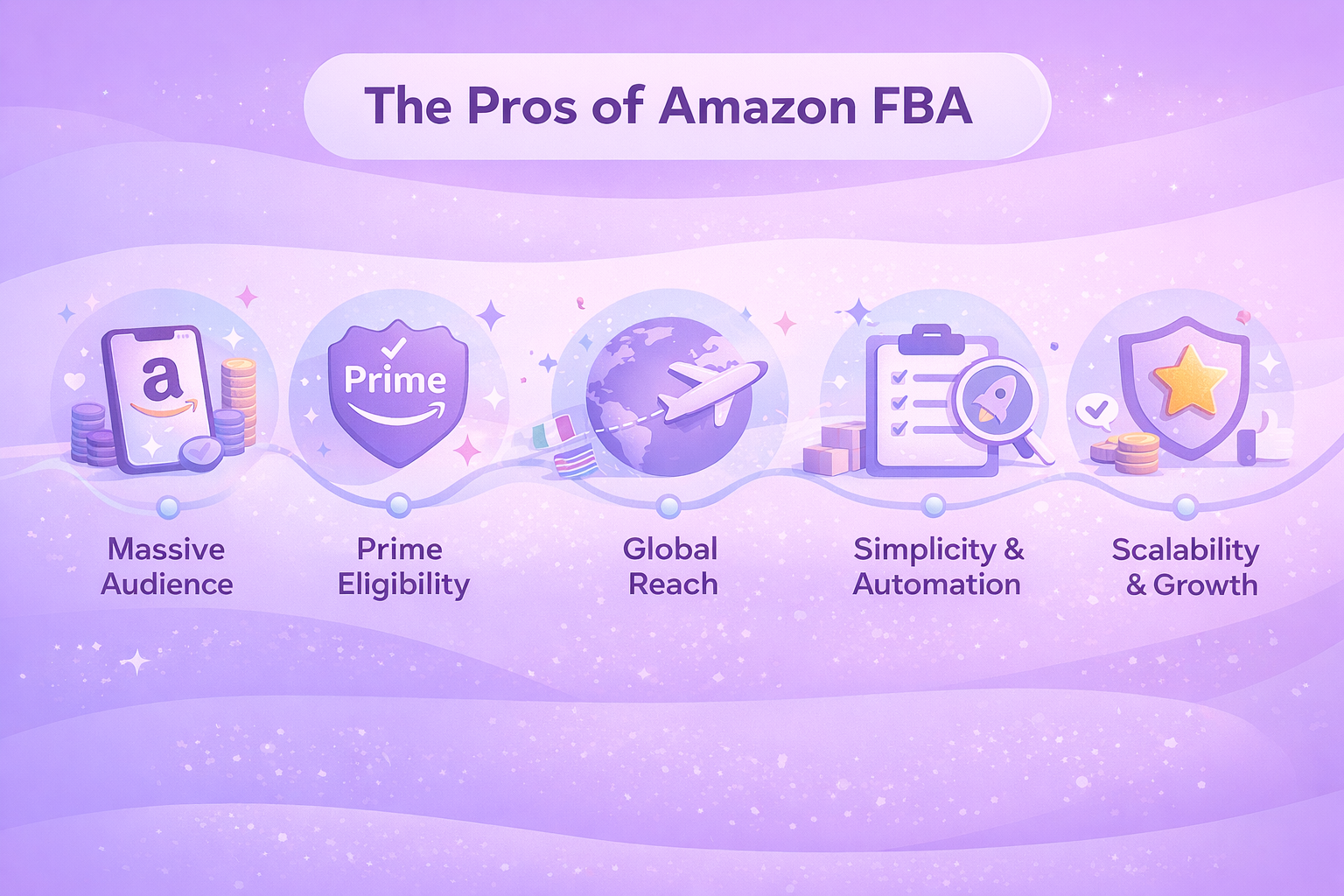
The Pros of Amazon FBA
Before diving into the potential downsides, let’s take a closer look at the advantages of using Amazon FBA. The service offers several benefits that can make running your e-commerce business smoother and more scalable, especially if you’re looking to grow quickly without worrying about logistics.
Amazon’s Massive Audience
One of the most compelling reasons to use Amazon FBA is the platform’s enormous reach. Amazon provides a vast customer base that would be difficult to tap into on your own. By using FBA, your products can be easily discovered by Amazon shoppers who already trust the platform.
Prime Eligibility
As an FBA seller, your products will be eligible for Amazon Prime. This gives you access to millions of Prime members who are more likely to purchase from you due to the fast shipping and other perks that come with Prime membership.
Global Reach
Amazon FBA allows you to sell in various international markets without the hassle of managing local fulfillment operations. You can reach customers across North America, Europe, and beyond, all using Amazon’s network of fulfillment centers.
Simplicity and Automation
Handling fulfillment can be one of the most time-consuming aspects of running an online business. Amazon FBA eliminates the need to manage inventory, pack orders, and deal with shipping logistics. With FBA, you send your products to Amazon’s warehouses, and Amazon takes care of everything else:
- Inventory management: Amazon keeps track of your inventory in real-time, so you don’t have to worry about stockouts or overstocking.
- Customer service and returns: Amazon handles customer inquiries and returns for you, which can save you a significant amount of time and resources.
Scalability and Growth
If you’re looking to scale your business, Amazon FBA is a powerful tool. Since Amazon takes care of logistics, customer service, and returns, you can focus more on growing your product line, marketing, and sales.
Plus, with the ability to store products in Amazon’s global fulfillment centers, you can scale quickly without worrying about warehousing or logistics:
- Multi-channel fulfillment: Amazon FBA allows you to use their fulfillment services for sales made on platforms other than Amazon, like your own website or eBay.
- Storage capacity: Amazon’s vast network of fulfillment centers means you can scale your business without needing to invest in warehouses or a large in-house team.
Marketing Benefits
With Amazon FBA, you gain access to Amazon’s powerful marketing tools, including Amazon advertising and promotions. You can use Amazon’s advertising platform to increase product visibility, enhance brand recognition, and drive more traffic to your listings:
- Advertising: With FBA, your products are eligible for Amazon’s Sponsored Products ads, which can boost visibility and sales.
- Buy Box Eligibility: FBA sellers are more likely to win the coveted Buy Box on Amazon, which increases product visibility and sales potential.
Enhanced Customer Trust
Amazon’s brand is trusted by millions of consumers worldwide. When you use FBA, your products are part of Amazon’s reliable and well-known fulfillment system. This trust can help convert browsers into buyers.
Prime members trust the FBA system, knowing they’ll receive their items quickly and in perfect condition. Amazon’s hassle-free returns process can give customers peace of mind and increase their likelihood of purchasing from you.
The Cons of Amazon FBA
While Amazon FBA offers many advantages, it’s not without its challenges. Let’s take a look at some of the drawbacks of using the service.
High Fees
FBA comes with several fees, including fulfillment fees, storage fees, and returns processing fees. These costs can add up quickly, especially if you’re selling low-priced or bulky products.
- Fulfillment fees: These fees cover the cost of picking, packing, and shipping your products. The fees vary depending on the size and weight of your items.
- Storage fees: If your products sit in Amazon’s warehouses for too long, you’ll incur long-term storage fees. These fees can eat into your profits if your inventory isn’t moving quickly.
- Additional costs: If your products are returned or require extra handling, you could face additional charges.
Less Control Over Your Products
When you use Amazon FBA, you give up some control over logistics and fulfillment, though sellers still retain control over their product listings. Amazon handles everything from inventory management to packaging and shipping. While this can be an advantage in terms of convenience, it may not be ideal for businesses that want to provide a highly personalized customer experience.
If you’re a brand-focused business, you may prefer to have more control over your packaging and presentation. With FBA, Amazon uses standardized packaging, which may not align with your branding. While Amazon tracks your inventory, it can sometimes lead to stockouts or inventory errors that can hurt your business.
Strict Policies and Rules
Amazon FBA has strict policies in place that you must follow, and these can be challenging for some sellers to navigate. From labeling requirements to product restrictions, there are many rules that FBA sellers must adhere to:
- Product restrictions: Certain products may not be eligible for FBA due to Amazon’s restrictions, especially in regulated categories like health and beauty.
- Amazon’s control: Amazon has control over the way your listings are presented, which may limit your ability to customize your storefront.
Increased Competition
With millions of sellers using Amazon FBA, competition can be fierce. Your product listings are displayed next to competing products, which can make it harder to stand out, but focusing on niche markets can still offer opportunities.
Sellers often compete on price, which can erode profit margins. If you’re unable to differentiate your products, you might struggle to stand out from the crowd. While FBA increases your chances of winning the Buy Box, you’re still competing with other FBA sellers for that spot.
Is Amazon FBA Too Saturated?
One concern that many new sellers have is that the Amazon marketplace is too saturated, making it difficult to succeed. While it’s true that more sellers are joining the platform, the demand for products on Amazon is also increasing. Amazon’s Prime membership continues to grow, and more buyers are turning to Amazon for their shopping needs.
In fact, Amazon FBA can still be a lucrative opportunity, especially when you take the right approach. It’s not about entering a market that’s too crowded; it’s about finding a niche, offering high-quality products, and standing out from the competition.

How to Succeed with Amazon FBA
If you’re thinking about using Amazon FBA, here are a few key strategies to help you succeed:
1. Know Your Numbers
Before you start selling, it’s crucial to have a clear understanding of your costs, profit margins, and fees. Use tools like the Amazon Revenue Calculator to estimate your FBA fees and determine if the margins are worth it.
2. Choose the Right Products
Product selection is one of the most important aspects of Amazon FBA success. Look for products that are in demand, have good profit margins, and are not overly saturated with competitors. Research your niche thoroughly and use Amazon tools to identify high-performing products.
3. Optimize Your Listings
Your product listings need to stand out. Invest time in writing compelling product descriptions, using high-quality images, and including relevant keywords. A well-optimized listing will improve your chances of getting noticed by potential buyers.
4. Use Amazon’s Advertising Tools
Amazon offers a range of advertising tools to help you increase visibility and drive traffic to your listings. Sponsored Products ads, in particular, can help your products appear at the top of search results and increase conversions.
5. Monitor and Optimize
FBA isn’t a set-it-and-forget-it solution. Regularly monitor your sales data, inventory levels, and advertising performance to ensure your business is on track. Make adjustments as needed to stay competitive and maximize profits.

Integrating WisePPC with Amazon FBA: A Game-Changer for Sellers
At WisePPC, we understand the challenges of managing and optimizing your Amazon FBA business. That’s why we’ve designed a platform that helps e-commerce businesses like yours unlock the full potential of their marketplace presence. Whether you’re selling on Amazon, Shopify, or multiple channels, we provide the advanced tools and analytics you need to grow faster and smarter.
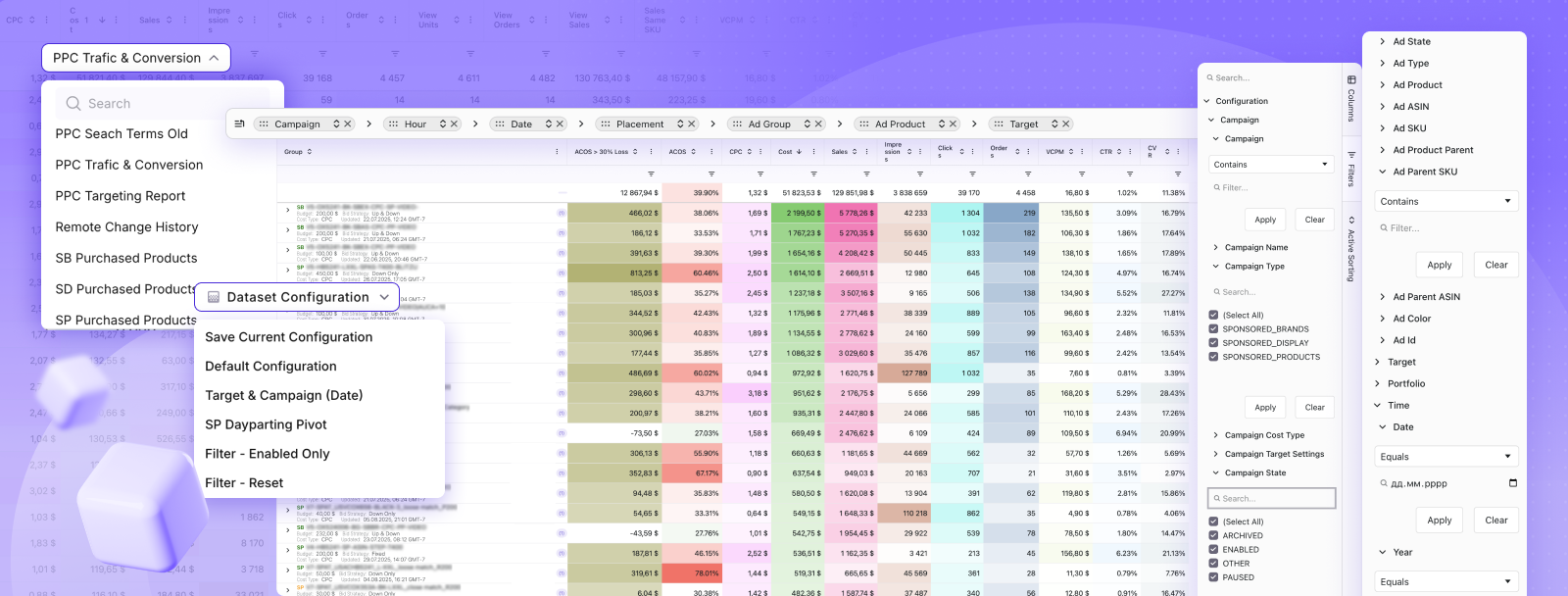
With WisePPC, we give you the visibility and control to manage your FBA business more efficiently. Our platform consolidates all your key metrics – advertising performance, sales data, and profit margins – into one easy-to-use dashboard. This means no more juggling third-party tools or spreadsheets. We make it simple for you to track real-time performance, optimize your campaigns, and make data-driven decisions that accelerate your growth.
Conclusion
So, is Amazon FBA worth it? The answer depends on your business goals, resources, and willingness to adapt to the platform’s challenges. For many sellers, FBA is a powerful way to scale their business, reach millions of customers, and simplify logistics.
However, FBA isn’t without its challenges. The costs can add up, and you’ll have less control over certain aspects of your business. But if you’re willing to put in the work, understand the costs, and make smart decisions, Amazon FBA can be a profitable and scalable solution.
In the end, it’s all about finding the right approach, choosing the right products, and staying committed to growing your business. If you’re ready to dive in, Amazon FBA can provide the tools and resources you need to succeed in the competitive world of e-commerce.
FAQ
1. How much does Amazon FBA cost?
The cost of using Amazon FBA varies depending on the type, size, and weight of your products. You’ll pay for storage, fulfillment (picking, packing, and shipping), and additional services like returns processing. Amazon charges a monthly storage fee based on the space your products occupy, and a fulfillment fee for each unit sold.
2. Is Amazon FBA profitable?
Yes, Amazon FBA can be profitable, but it depends on how well you manage your costs and scale your operations. By leveraging Amazon’s extensive logistics network and Prime eligibility, you can reach a massive audience and increase sales. However, to make FBA truly profitable, you’ll need to carefully select your products, optimize your listings, and monitor your costs closely.
3. How does FBA affect my Amazon ranking?
Using FBA can positively impact your Amazon ranking, particularly because your products become eligible for Amazon Prime. This means your products will be eligible for two-day shipping, which is a big selling point for many customers. Additionally, FBA products tend to get better visibility in search results and have a higher chance of winning the Buy Box, which can significantly increase your sales.
4. What are the biggest challenges with Amazon FBA?
While Amazon FBA offers many benefits, there are some challenges to consider. The biggest challenge is the cost – FBA fees can eat into your margins if you’re not careful with your pricing and inventory management. Additionally, you have less control over the fulfillment process, which means your products will be packaged and shipped according to Amazon’s standards.
5. Can I manage an FBA with a small business?
Absolutely. Many small businesses use FBA to scale efficiently without needing to invest heavily in warehousing or logistics. FBA takes care of the heavy lifting, allowing you to focus on growing your product range, marketing, and customer relationships. However, it’s important to keep track of your inventory and manage costs to ensure that the fees don’t cut into your profits as you grow.
Join the WisePPC Beta and Get Exclusive Access Benefits
WisePPC is now in beta — and we’re inviting a limited number of early users to join. As a beta tester, you'll get free access, lifetime perks, and a chance to help shape the product — from an Amazon Ads Verified Partner you can trust.
 No credit card required
Free in beta and free extra month free after release
25% off for life — limited beta offer
Access metrics Amazon Ads won’t show you
Be part of shaping the product with your feedback
No credit card required
Free in beta and free extra month free after release
25% off for life — limited beta offer
Access metrics Amazon Ads won’t show you
Be part of shaping the product with your feedback