EN
EN  ES
ES  FR
FR  DE
DE  IT
IT  KO
KO  JA
JA  ZH
ZH  AR
AR  PT
PT  TR
TR  PL
PL Augmented Reality in Retail: Revolutionizing How We Shop

Augmented reality (AR) has shifted from a futuristic concept to a practical tool for businesses and consumers alike, especially in the retail sector. By blending the digital and physical worlds, AR offers new ways for customers to interact with products before purchasing. This technology has not only enhanced the shopping experience but also created new opportunities for brands to engage with customers in a more personalized and immersive way. In this article, we’ll explore how AR is transforming the retail landscape and why it’s becoming an essential tool for businesses in 2026.
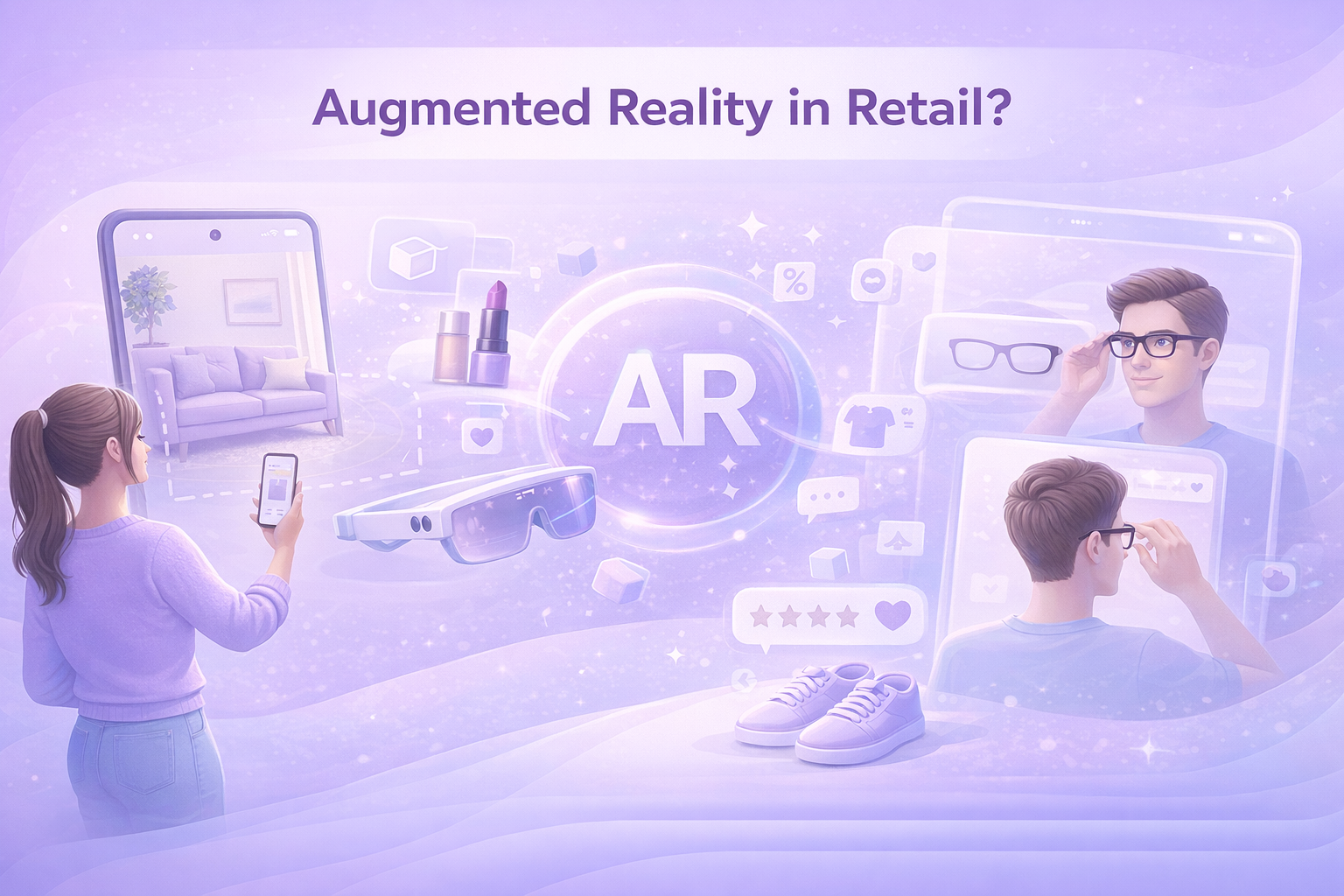
What is Augmented Reality in Retail?
In simple terms, augmented reality (AR) overlays digital content – such as images, sounds, or information – onto the real world. Unlike virtual reality (VR), which immerses users in a completely digital environment, AR enhances the real world by adding digital elements visible through smartphones, tablets, and AR glasses. This technology has seen rapid adoption in various sectors, particularly retail, where it has redefined how products are displayed and experienced.
For instance, AR allows customers to try on products virtually, view them in their home environment, or even interact with brands in entirely new ways. Whether it’s visualizing a sofa in a living room, trying on a pair of glasses without stepping foot in a store, or experimenting with different shades of makeup, AR bridges the gap between online and in-person shopping.
The Rise of AR in Retail: Why It Matters
The adoption of AR in retail has grown at an impressive rate over the past few years. According to a study by NielsenIQ, 56% of consumers believe AR boosts their confidence in a product’s quality. Moreover, 61% of shoppers prefer retailers that offer AR experiences. This growing interest is a response to the changing nature of consumer expectations, especially as online shopping continues to rise.
Today, AR is not just an exciting gimmick – it’s becoming a necessary tool for retailers who want to stay competitive. The ability to give customers a realistic, engaging shopping experience not only increases their satisfaction but also drives sales and reduces return rates.
How AR is Shaping the Retail Experience
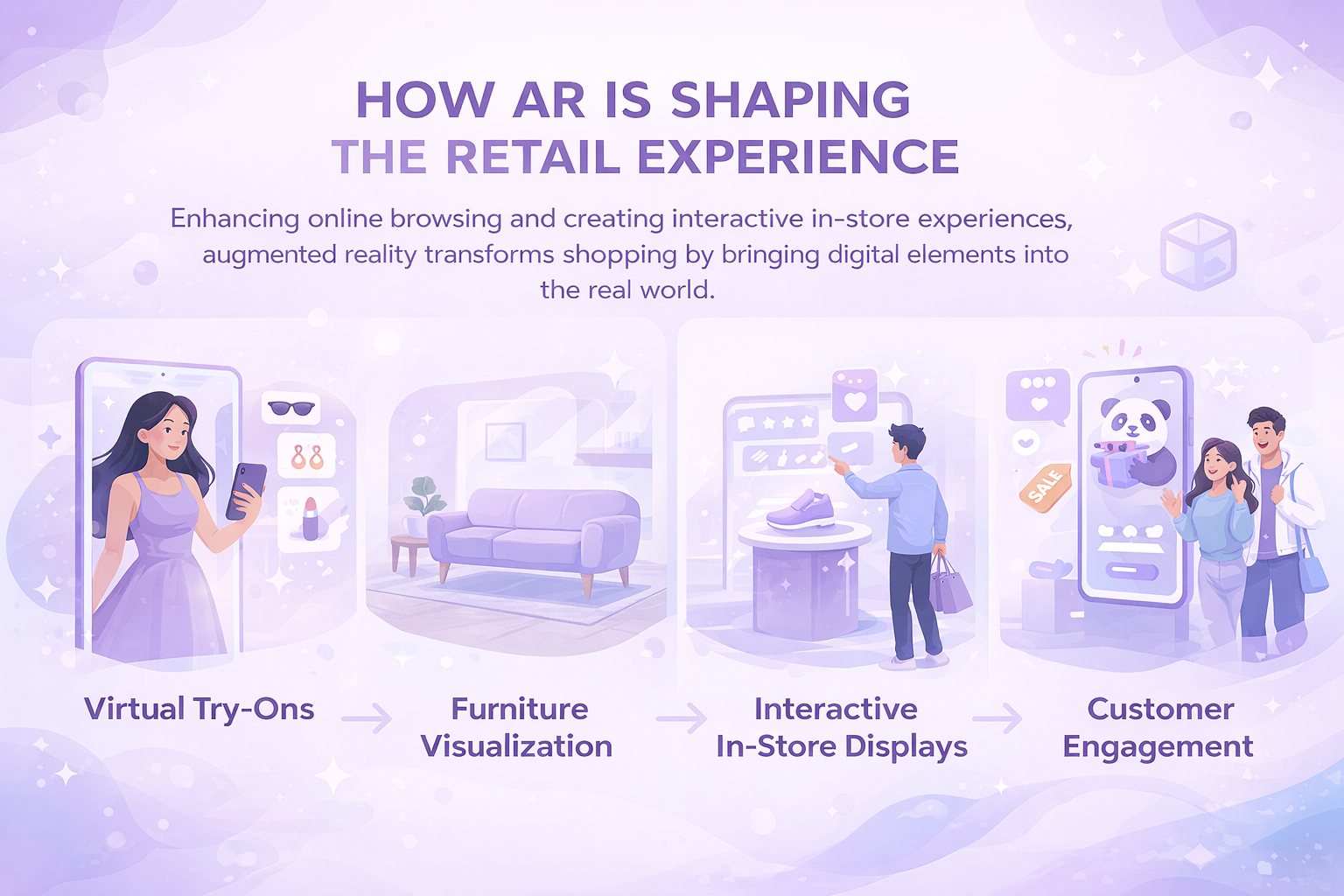
Augmented reality is more than just a buzzword in retail – it’s a transformative tool that’s reshaping how we shop. From enhancing online browsing to creating interactive in-store experiences, AR brings digital elements into the real world, making shopping more engaging and personalized. As we explore the various ways AR is shaping the retail landscape, it’s clear that this technology is improving customer experience, and here is how:
1. Virtual Try-Ons
One of the most common applications of AR in retail is virtual try-ons. Brands in the fashion and beauty industries have led the charge by using AR to allow customers to try on clothes, makeup, and accessories without physically touching the products. This level of personalization helps customers make more informed decisions and reduces the likelihood of returns due to sizing or style mismatches.
Key Benefits:
- Helps customers see how products will look on them
- Increases engagement with the brand
- Reduces returns and customer dissatisfaction
2. Furniture and Home Goods Visualization
Another key area where AR has made a significant impact is in home goods and furniture retail. Users can scan their living spaces and see digital representations of furniture items in real time, ensuring a better fit before making a purchase. This reduces uncertainty, enhances decision-making, and provides customers with a clearer sense of what they are buying.
Key Benefits:
- Allows customers to visualize products in their actual living space
- Reduces uncertainty in home furnishing purchases
- Increases customer confidence and satisfaction
3. Interactive In-Store Displays
AR technology is also making its way into physical stores, where it’s used to enhance the in-person shopping experience. Interactive AR displays allow customers to interact with digital content in real time, such as viewing product features, checking sizes, or even personalizing products. These experiences can be especially useful for creating memorable shopping moments that encourage customers to spend more time in-store, ultimately boosting conversion rates.
Key Benefits:
- Keeps customers engaged within the store
- Offers deeper product insights and customization
- Enhances the overall shopping experience
4. AR for Customer Engagement and Brand Loyalty
AR doesn’t just change how we shop – it also changes how brands engage with consumers. Companies are increasingly using AR for marketing campaigns that go beyond traditional advertising. This adds a layer of entertainment that helps strengthen brand loyalty and keeps customers coming back.
Key Benefits:
- Encourages repeat engagement and brand loyalty
- Provides customers with a fun, interactive experience
- Differentiates brands in a competitive market
The Business Benefits of AR in Retail
For businesses, adopting augmented reality offers more than just a new way to engage customers – it drives tangible benefits that can boost both revenue and efficiency. From reducing return rates to enhancing customer engagement, AR provides retailers with:
1. Increased Sales and Conversions
By giving customers the ability to interact with products virtually, AR enhances decision-making and boosts conversion rates. Studies have shown that AR-driven experiences increase customer engagement, which directly impacts sales.
2. Reduced Return Rates
One of the most significant challenges in retail, especially for e-commerce, is the high rate of returns. However, AR can help reduce this issue by giving customers the opportunity to try products before buying. Whether it’s virtually trying on clothes, visualizing furniture in their home, or testing makeup shades, AR ensures that customers know exactly what they’re getting, which significantly reduces the chances of returns.
3. Improved Customer Data Insights
AR provides retailers with valuable insights into consumer behavior. By tracking how customers interact with AR features, retailers can gather data on preferences, choices, and even emotional responses to products. This data can then be used to personalize marketing campaigns, optimize product offerings, and enhance the customer experience.

Challenges and Considerations in Implementing AR in Retail
While AR offers numerous benefits, its implementation is not without challenges. Retailers need to consider factors such as the cost of developing AR technology, user adoption, and device compatibility.
1. High Initial Costs
Developing and integrating AR solutions into retail platforms can be costly. From designing apps to purchasing AR glasses or headsets, retailers need to invest significant resources to create an effective AR experience. However, the long-term benefits, such as reduced return rates and increased sales, often outweigh the initial investment.
2. Technical Complexity
AR technology is complex and requires technical expertise to develop and maintain. Retailers must ensure that their AR solutions are intuitive, fast, and compatible across different devices. A poorly executed AR experience can lead to customer frustration and lower adoption rates.
3. Data Privacy Concerns
As AR technology collects data on user behavior and preferences, there are potential privacy concerns that retailers must address. It’s essential for businesses to ensure they comply with data protection regulations and use customer data responsibly.
The Future of AR in Retail
The future of AR in retail is incredibly promising. As technology continues to evolve, AR will become more sophisticated and accessible. With advancements in AR glasses, mobile devices, and AI-powered personalization, retailers will have even more tools at their disposal to enhance the shopping experience.
In the next few years, we can expect to see AR integrated into more areas of retail, including:
- Personalized shopping experiences: AR will help create highly personalized shopping experiences by tailoring product recommendations, offers, and even store layouts based on individual preferences.
- AI integration: Combining AR with artificial intelligence will allow retailers to create even more intelligent and intuitive shopping experiences, such as automated styling suggestions or personalized home décor.
- Wider adoption across industries: As the technology becomes more affordable and easier to implement, AR will spread across a wider range of industries, from fashion to automotive and beyond.

WisePPC: Empowering Retailers to Optimize with Data-Driven Insights
As augmented reality continues to revolutionize the retail landscape, leveraging data has become essential for businesses to stay ahead. At WisePPC, we understand that the power of technology lies not just in its implementation but in the ability to use the resulting data effectively. Our platform integrates seamlessly with e-commerce channels like Amazon and Shopify, offering retailers powerful analytics and automation tools that can complement AR-driven experiences.
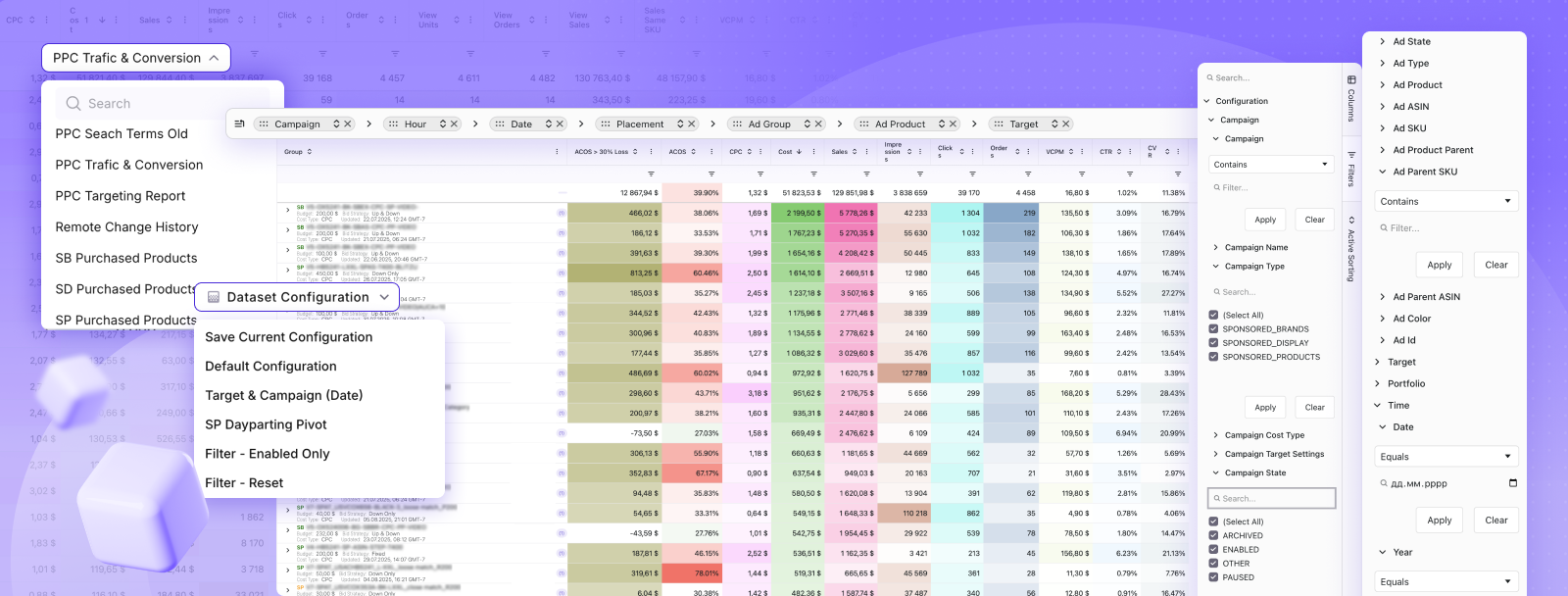
WisePPC helps businesses optimize advertising strategies and track key metrics, complementing AR-driven experiences by focusing on back-end data analysis and campaign management. With features like bulk updates, historical metrics analysis, and AI-powered campaign adjustments, WisePPC ensures that retailers can scale and refine their strategies with precision.
Whether it’s through improved ad targeting, detailed campaign performance insights, or real-time decision-making, WisePPC is helping businesses harness the full potential of both AR and data-driven optimization. The combination of immersive technology and actionable insights creates a robust strategy that not only attracts customers but also drives long-term growth.
Conclusion
Augmented reality is no longer just a futuristic idea – it’s here, and it’s changing the way we shop. By merging the digital and physical worlds, AR offers an interactive, engaging, and personalized shopping experience that enhances customer satisfaction, drives sales, and reduces return rates. While the technology is still evolving, its potential in retail is undeniable, and brands that embrace AR now are likely to reap the benefits in the future.
As we look ahead, it’s clear that AR will continue to play a central role in shaping the future of retail, helping brands create more meaningful connections with their customers while driving business growth.
FAQ
1. How does augmented reality improve the shopping experience?
Augmented reality takes shopping to the next level by allowing customers to virtually try on products, visualize how furniture will fit in their space, or experiment with different makeup shades, all before making a purchase. This enhanced experience reduces uncertainty, boosts confidence in buying decisions, and helps brands create memorable, personalized interactions.
2. Is augmented reality only for online shopping?
Not at all! While AR started in online spaces, it’s quickly making its way into physical stores too. Many retailers are implementing AR in-store displays, where customers can engage with products digitally – whether that’s exploring customization options or getting more details about a product. It’s the best of both worlds – virtual and real.
3. How can augmented reality help reduce return rates?
AR allows customers to try before they buy, whether they’re visualizing a piece of furniture in their living room or trying on a pair of shoes virtually. By ensuring customers know exactly what they’re getting, AR helps reduce the chances of dissatisfaction and, in turn, lowers the rate of returns.
4. What are some challenges when adopting AR in retail?
While AR can be a game-changer, there are a few bumps along the way. For one, implementing AR requires a significant investment in technology and development. Plus, businesses need to ensure the experience is intuitive and user-friendly – after all, no one wants to struggle with clunky technology. Finally, data privacy concerns are always at the forefront, especially when AR is gathering customer insights to improve personalized shopping.
5. Will AR replace in-store shopping?
AR isn’t about replacing traditional shopping – it’s about enhancing it. While AR makes online shopping more interactive, in-person shopping still offers unique experiences, like instant gratification and personal service. What AR does is make both experiences more seamless, providing customers with the best of both worlds.
6. How can retailers track customer interactions with AR?
AR doesn’t just benefit customers – it also provides valuable data to retailers. By tracking how shoppers interact with AR features, businesses can gather insights about preferences, behaviors, and even potential purchasing patterns. This helps brands refine their strategies and optimize future campaigns.
7. What’s the future of augmented reality in retail?
The future is bright. As AR technology becomes more sophisticated and accessible, expect to see even more immersive experiences, like virtual stores, real-time product personalization, and deeper AI integrations. Retailers that embrace AR now will likely lead the charge in shaping how we shop for years to come.
Join the WisePPC Beta and Get Exclusive Access Benefits
WisePPC is now in beta — and we’re inviting a limited number of early users to join. As a beta tester, you'll get free access, lifetime perks, and a chance to help shape the product — from an Amazon Ads Verified Partner you can trust.
 No credit card required
Free in beta and free extra month free after release
25% off for life — limited beta offer
Access metrics Amazon Ads won’t show you
Be part of shaping the product with your feedback
No credit card required
Free in beta and free extra month free after release
25% off for life — limited beta offer
Access metrics Amazon Ads won’t show you
Be part of shaping the product with your feedback