EN
EN  ES
ES  FR
FR  DE
DE  IT
IT  KO
KO  JA
JA  ZH
ZH  AR
AR  PT
PT  TR
TR  PL
PL How Amazon Multi-Channel Fulfillment Works for Online Sellers

Selling on multiple channels opens the door to more customers, but it also adds pressure on fulfillment. Different platforms mean different shipping rules, delivery expectations, and inventory challenges. Amazon Multi-Channel Fulfillment, or MCF, is built to simplify that process.
MCF lets sellers use Amazon’s fulfillment network to store, pack, and ship orders placed outside the Amazon marketplace. Instead of managing separate warehouses or third-party logistics providers, sellers can fulfill orders from their website, ecommerce platforms, and social channels using the same inventory and infrastructure.
This guide breaks down how Amazon MCF works, how it compares to FBA, and when it makes sense to use it as part of a multi-channel selling strategy.
What Amazon Multi-Channel Fulfillment Really Is
Amazon Multi-Channel Fulfillment allows sellers to use Amazon’s logistics infrastructure to fulfill orders placed outside the Amazon marketplace.
That includes:
- Your own direct-to-consumer website
- Ecommerce platforms like Shopify
- Social commerce channels
- Other online marketplaces
You send inventory into Amazon’s fulfillment centers the same way you would for Fulfillment by Amazon (FBA). The difference is where the orders come from. FBA handles orders placed on Amazon. MCF handles orders placed everywhere else.
Instead of splitting inventory across multiple warehouses, you work from a single pool of stock. Amazon takes care of picking, packing, and shipping, while you stay focused on selling and marketing.
MCF vs FBA: What’s the Difference?
| Aspect | Fulfillment by Amazon (FBA) | Multi-Channel Fulfillment (MCF) |
| Order source | Fulfills orders placed directly on Amazon | Fulfills orders placed outside Amazon, such as websites, ecommerce platforms, and social channels |
| Fulfillment network | Uses Amazon’s fulfillment centers | Uses the same Amazon fulfillment centers |
| Customer service | Amazon handles customer service and returns | Seller manages customer communication; Amazon can process returns if enabled |
| Branding & packaging | Amazon-branded packaging is common | Unbranded packaging available by default |
| Pricing structure | Fees based on FBA storage and fulfillment rates | Separate MCF fulfillment fees based on shipping speed and order type |
| Best use case | Selling primarily on Amazon | Selling across multiple channels using a single inventory pool |
You don’t have to choose one or the other. Many sellers use FBA for Amazon orders and MCF for off-Amazon sales, depending on where the customer checks out.
How Amazon MCF Works in Practice
Once your inventory is inside Amazon’s fulfillment network, creating MCF orders is straightforward.
When a customer places an order on one of your connected channels, you submit the order details to Amazon. From there:
- Amazon picks the items
- Packs them based on your packaging preferences
- Ships them using the selected delivery speed
Both you and your customer can track the shipment. Amazon can also handle returns if you route them back through the fulfillment network.
For sellers already using FBA, the setup feels familiar. The main difference is that you’re controlling fulfillment for off-Amazon sales instead of relying on separate logistics providers.

Shipping Speeds and Delivery Expectations
MCF offers three shipping speed options when creating orders in Seller Central:
- Standard shipping: Delivered in 3 business days, with tracking typically available within two days.
- Expedited shipping: Delivered in 2 business days, with tracking usually available the next business day.
- Priority (Next Day): Priority shipping offers next-business-day delivery for eligible orders. This option is designed for time-sensitive purchases where speed is critical, such as high-value items, last-minute orders, or premium customer experiences.
If you use Buy with Prime, eligible orders can qualify for free one- to two-day Prime shipping, which can significantly improve conversion rates on your own website.
Packaging and Branding Options
Packaging is often one of the first concerns sellers raise when looking at MCF, especially for direct-to-consumer orders where brand perception matters.
By default, Amazon MCF uses unbranded boxes whenever possible. That means shipments typically arrive without Amazon logos, helping your own brand stay visible and consistent across customer touchpoints. For many sellers, this makes MCF a workable option even for branded storefronts and subscription orders.
As of 2024, Amazon MCF utilizes unbranded packaging as the default standard for eligible items at no additional cost. This streamlined process ensures that branding consistency does not compromise delivery speed.
Carriers and Delivery Control
Amazon MCF delivers orders using a mix of carriers, including Amazon Logistics and established third-party delivery partners.
If you’d rather avoid Amazon Logistics for certain shipments, you can block it for a small additional fee. When you do, Amazon routes the order through other carriers instead. This option can be useful for sellers with carrier preferences, regional delivery considerations, or specific customer expectations around last-mile delivery.
While most sellers stick with the default carrier setup, having the ability to adjust delivery options adds flexibility without requiring a separate logistics provider.
Returns: Who Handles What
Returns with MCF are flexible, but responsibility is clearly split.
Sellers can choose to:
- Let Amazon process returns and route items back to the fulfillment network
- Handle returns themselves and manage customer communication directly
If Amazon receives a returned item, it can be inspected and added back into your available inventory, depending on its condition. Even when Amazon processes the return, sellers remain responsible for issuing refunds and staying in contact with customers. This setup gives sellers control over the customer experience while still reducing the operational work tied to reverse logistics.

3 Ways to Create MCF Orders
1. Creating Orders Manually
For low-volume or occasional orders, creating MCF orders one at a time in Seller Central is often the simplest option.
You manually enter the customer’s shipping details, select the products and quantities, choose a shipping speed, review the fulfillment cost, and submit the order. Everything is handled from a single screen, which makes it easy to double-check details before shipping.
There’s also an option to place a temporary hold on inventory. This reserves stock without shipping it right away, which can be useful if payment is pending or you need to delay fulfillment for a short period.
2. Uploading Orders in Bulk
When order volume increases, bulk order creation becomes much more efficient than entering orders individually.
With this method, you download a spreadsheet template from Seller Central, fill in order information for multiple customers at once, and upload the completed file. The template includes clear instructions and examples, which helps reduce formatting errors.
Bulk uploads work especially well for flash sales, wholesale shipments, crowdfunding campaigns, or batch processing orders from external platforms that don’t have direct integrations.
3. Automating Orders With Integrations or APIs
Many sellers eventually move to automated MCF order creation to save time and reduce manual work.
Amazon supports a wide range of pre-built integrations that connect MCF with ecommerce platforms, marketplaces, and order management systems. For more custom setups, sellers can also use APIs to build direct connections between their sales channels and Amazon’s fulfillment network.
Automation helps ensure orders are submitted quickly and accurately as volume grows, lowering the risk of delays or fulfillment errors and making multi-channel operations easier to scale.
Using Buy with Prime to Automate MCF
Buy with Prime connects directly to Amazon Multi-Channel Fulfillment and allows customers to check out on your website using their Amazon account. For shoppers, the experience feels familiar and low-friction, with clear delivery expectations and fast shipping tied to their Prime membership.
From the seller’s perspective, Buy with Prime removes another layer of manual work. Orders placed through the Buy with Prime checkout are automatically routed to MCF, where Amazon handles picking, packing, shipping, and delivery. That means fewer fulfillment steps to manage and fewer chances for errors as order volume grows.
Many sellers see improved conversion rates after enabling Buy with Prime, particularly for products where shipping speed and reliability influence buying decisions. Showing Prime delivery options early in the checkout process can reduce hesitation and help customers feel more confident completing a purchase.

Automate Your Marketplace Operations With WisePPC
Automating fulfillment with MCF is a strong start. The next step is making smarter decisions across advertising and sales as your operation scales. That’s where we come in.
At WisePPC, we help sellers turn complex marketplace data into clear, usable insights. Our platform brings advertising and sales performance into one place, giving you visibility across Amazon and other channels without relying on spreadsheets or short data windows.
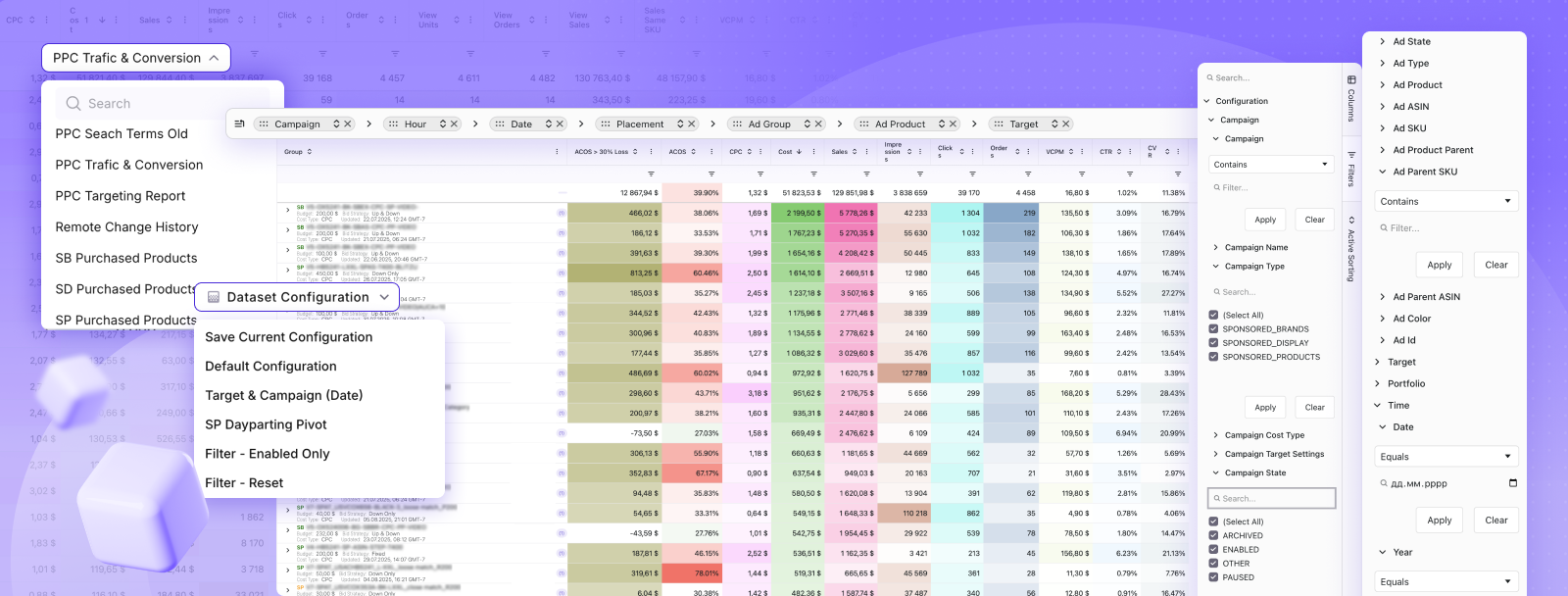
With long-term historical data, real-time tracking, and advanced filtering, you can spot trends earlier, reduce wasted ad spend, and act faster. Bulk actions and on-spot editing make it easier to manage campaigns at scale, while granular reporting helps you understand what’s actually driving results.
When fulfillment runs through MCF and performance insights live in WisePPC, your business becomes easier to manage and simpler to scale.
When MCF Makes the Most Sense
MCF isn’t for everyone, but it shines in a few specific situations:
- You sell on multiple channels and want centralized fulfillment
- You want fast shipping without managing your own warehouse
- You need reliable logistics during peak seasons
- You want long-term access to fulfillment data beyond Amazon’s native limits
If your operation is growing and fulfillment complexity is slowing you down, MCF can remove a lot of friction.

Common Mistakes Sellers Make With MCF
Even experienced sellers can run into issues when setting up Amazon Multi-Channel Fulfillment, especially when rolling it out across multiple sales channels. Most problems don’t come from the system itself, but from small configuration choices that get overlooked early on.
Some common missteps include:
- Forgetting to align inventory levels across channels. When stock isn’t synced properly, sellers risk overselling on one channel while inventory sits unused in another.
- Choosing shipping speeds that hurt margins unnecessarily. Faster delivery isn’t always better. Using expedited shipping for every order can quietly eat into profits without improving conversion.
- Overlooking packaging settings for branded orders. Not checking packaging options can result in shipments that don’t match brand expectations or delivery priorities.
- Treating MCF like a “set and forget” system instead of reviewing performance. Fulfillment settings, costs, and delivery outcomes should be reviewed regularly, especially as order volume grows.
Taking time to review your MCF setup and performance early on can help avoid costly fulfillment issues and make scaling smoother later.
Tracking MCF Orders and Performance
You can track all MCF orders directly in Seller Central.
From the Orders section, you can filter by non-Amazon sales channels, view shipment status, check tracking numbers, and see estimated delivery dates. Carrier-level tracking is also available once the order ships.
This visibility helps you stay on top of fulfillment without jumping between systems.
Final Thoughts: Scaling Without Adding Complexity
Amazon Multi-Channel Fulfillment is not about replacing every part of your operation. It’s about removing friction where it matters most.
By using one fulfillment network across multiple sales channels, you can simplify logistics, improve delivery speed, and create a more consistent customer experience without building everything from scratch.
If you’re already selling across channels, MCF is often less about changing how you sell and more about making fulfillment finally work the way it should.
Frequently Asked Questions
Can I use Amazon MCF for orders placed on Amazon?
MCF is designed for orders placed outside the Amazon marketplace. Orders placed on Amazon itself are fulfilled through FBA. Many sellers use both at the same time, depending on where the sale happens.
Do I need to sell on Amazon to use MCF?
You don’t have to actively sell products on Amazon, but you do need an Amazon selling account or access through the Supply Chain Portal. Sellers can keep listings hidden from the Amazon storefront while still using MCF for off-Amazon orders.
Is Amazon MCF the same as a third-party logistics provider (3PL)?
Not exactly. MCF works like a 3PL in practice, but it’s directly tied into Amazon’s fulfillment network. That gives sellers access to fast shipping, broad carrier coverage, and tight integration with other Amazon services.
Can I control shipping speed for MCF orders?
Yes. When creating MCF orders, sellers choose between standard and expedited shipping. Selecting the right speed is important for balancing delivery expectations and fulfillment costs.
Does Amazon branding appear on MCF shipments?
By default, MCF uses unbranded packaging when possible. Sellers can also choose to ship only in blank boxes during order creation, though that may affect delivery speed in some cases.
Join the WisePPC Beta and Get Exclusive Access Benefits
WisePPC is now in beta — and we’re inviting a limited number of early users to join. As a beta tester, you'll get free access, lifetime perks, and a chance to help shape the product — from an Amazon Ads Verified Partner you can trust.
 No credit card required
Free in beta and free extra month free after release
25% off for life — limited beta offer
Access metrics Amazon Ads won’t show you
Be part of shaping the product with your feedback
No credit card required
Free in beta and free extra month free after release
25% off for life — limited beta offer
Access metrics Amazon Ads won’t show you
Be part of shaping the product with your feedback