EN
EN  ES
ES  FR
FR  DE
DE  IT
IT  KO
KO  JA
JA  ZH
ZH  AR
AR  PT
PT  TR
TR  PL
PL Proven Brand Management Strategies That Drive Real Growth

Most people think of branding as design choices – logos, colors, maybe a catchy slogan. But brand management goes deeper. It’s the process of shaping how people recognize your brand, how they feel about it, and why they come back. The key isn’t just creating a great first impression – it’s making sure every impression after that stays true, clear, and consistent.
That means building a solid brand identity, sticking to core guidelines, and evolving strategically over time. In this guide, we’ll unpack its main components, walk through practical strategies, and look at how real companies keep their brand aligned, recognizable, and relevant.
What Is a Brand, Really?
A brand isn’t just a logo or a catchy name. It’s the way people think and feel about your business – the mental image they associate with you, the gut-level trust you’ve earned, and the reason they choose you over someone else. It’s shaped by everything from your visual identity (like your logo, color palette, and typography) to the way you speak to your audience through tone and language.
It’s also rooted in your values and mission – what your business stands for beyond just selling a product. Every customer interaction, from the first click to post-sale support, contributes to the experience. And over time, your reputation is built on what people say when you’re not in the room.
Brand management is how you protect and shape all of that – with intention, consistency, and strategy.
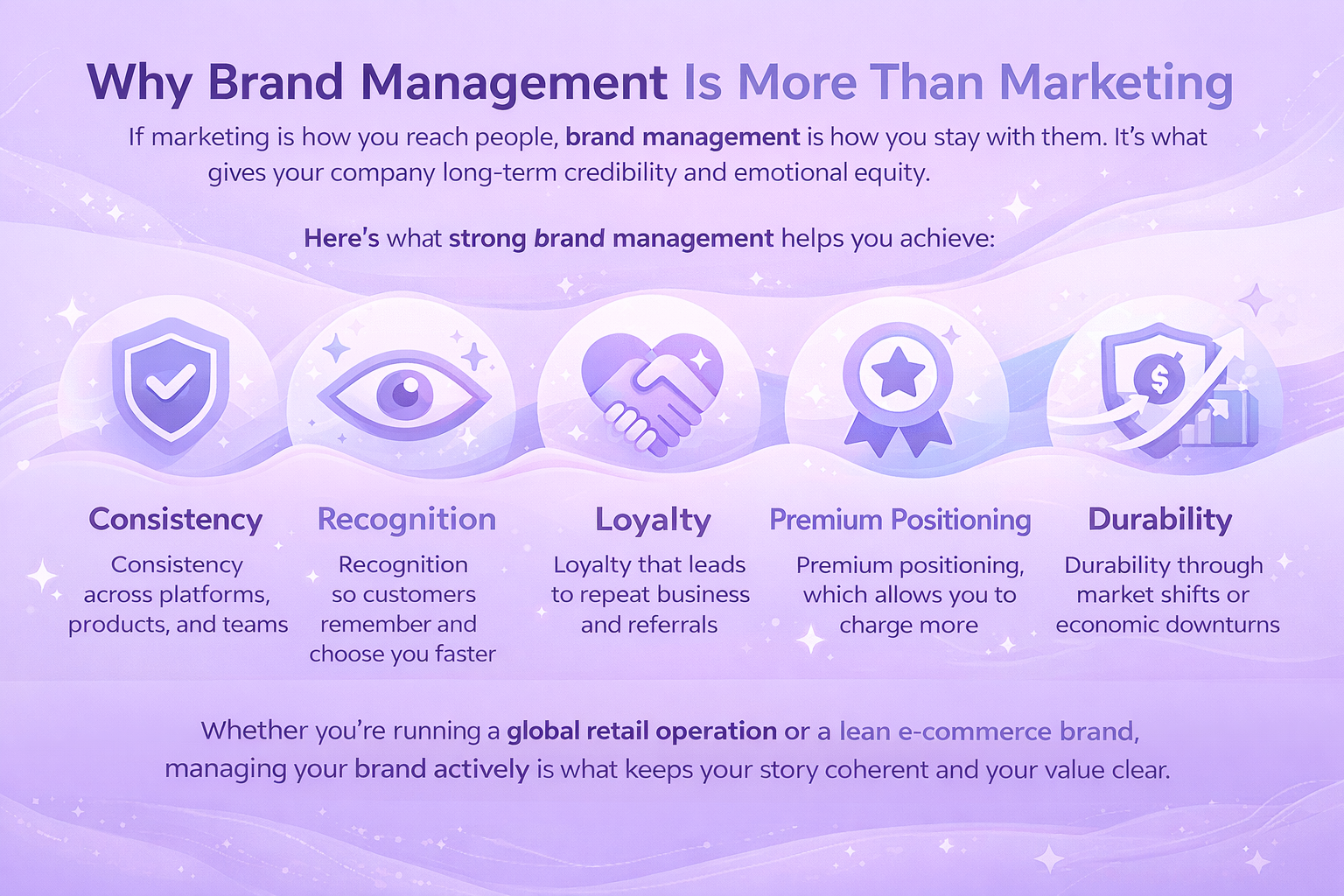
Why Brand Management Is More Than Marketing
If marketing is how you reach people, brand management is how you stay with them. It’s what gives your company long-term credibility and emotional equity.
Here’s what strong brand management helps you achieve:
- Consistency across platforms, products, and teams.
- Recognition so customers remember and choose you faster.
- Loyalty that leads to repeat business and referrals.
- Premium positioning, which allows you to charge more.
- Durability through market shifts or economic downturns.
Whether you’re running a global retail operation or a lean e-commerce brand, managing your brand actively is what keeps your story coherent and your value clear.
Core Components of Brand Management
Brand management sounds like a big, abstract idea until you start looking at what you’re actually managing. At its core, it comes down to five interconnected elements that shape how people perceive, trust, and interact with your business. Let’s walk through them.
1. Brand Identity
This is how your brand looks – the visual impression people instantly associate with your name. It includes your logo, colors, fonts, and layout across everything from your website to your packaging. The goal isn’t flash, it’s clarity and consistency. Recognition builds trust.
2. Brand Voice
Voice is how your brand sounds. Whether casual or formal, clever or direct, the tone should match your audience and stay consistent across platforms. A strong voice makes your brand feel familiar and trustworthy.
3. Brand Values and Mission
This is the reason behind your business. Clear values and a meaningful mission guide decisions and connect with customers on a deeper level. When lived out authentically, they become a magnet for loyalty. This is the heart of your brand – the reason you exist beyond making a profit.
4. Brand Equity
Brand equity is the value people place on your name based on their experiences and impressions. You build it by being consistent, delivering quality, and creating emotional connections. It’s why people choose you without second-guessing.
5. Customer Experience
Every interaction shapes how people feel about your brand. From browsing to buying to support, it all matters. A smooth, thoughtful customer journey should reflect your brand’s identity, values, and tone at every step.

Proven Brand Management Strategies (That Actually Work)
Now let’s talk tactics. These are strategies real brands use to grow, stay aligned, and keep their value sharp over time.
1. Define and Document Everything Early
Don’t wait until things get messy. From day one, create clear documentation of your brand identity, tone, positioning, and visual standards.
What to include:
- Logo variations and how to use them.
- Approved colors and typography.
- Writing style guidelines.
- Messaging frameworks for different audiences.
- Brand mission and vision statements.
Use a digital asset management tool or a living brand portal so teams can access the latest versions anytime.
2. Align Internal Teams Around the Brand
Your brand doesn’t live in the marketing department. Everyone touches the brand – from your product team to customer service. They all need to know how to represent it.
How to make it stick:
- Build brand training into onboarding.
- Make brand guidelines accessible and user-friendly.
- Share wins and examples of good brand execution.
- Encourage feedback on how to improve alignment.
When teams are aligned, execution becomes faster and more consistent, even across geographies or time zones.
3. Use Technology to Scale Consistency
As a brand grows, managing everything manually starts to break down. More products, more markets, more people involved – it all increases the chances that something will slip off-brand. That’s where technology makes a real difference. Instead of relying on scattered files or back-and-forth approvals, a good system creates a central source of truth.
It helps teams find the right assets, follow the right voice, and publish content that actually reflects the brand. Built-in workflows can guide what gets out the door, while analytics give visibility into how brand materials are being used in the real world. Some tools even use AI to flag inconsistencies or recommend smarter alternatives before mistakes go live. It’s not about enforcing rules for the sake of control – it’s about giving people the structure and tools they need to do things right the first time.
4. Tailor Brand Strategy to Each Growth Phase
Brand management doesn’t look the same at every stage. A startup validating product-market fit needs a different focus than a mature brand entering new markets.
Here’s how to shift your strategy over time.
Early stage:
- Focus on defining identity and building awareness.
- Keep messaging consistent across a small set of channels.
Growth stage:
- Introduce guidelines for scale (tone of voice, visuals, templates).
- Begin segmenting audiences and tailoring messaging.
Mature stage:
- Expand with sub-brands, partnerships, or new verticals.
- Double down on internal governance and asset management.
Good brand managers revisit their strategy regularly, because growth changes everything.
5. Focus on Consistency Without Killing Creativity
Being “on-brand” doesn’t mean being boring. It means using familiar building blocks in new ways.
Tips for keeping it fresh:
- Let teams experiment within defined brand systems.
- Provide creative templates rather than strict layouts.
- Showcase standout executions to inspire others.
- Avoid micromanaging every word or pixel.
Consistency builds trust. But creativity builds attention. You need both and the right system lets them work together.
6. Make Brand Performance Measurable
Brand isn’t just a feel-good concept – it has real, trackable influence on growth if you know where to look. The key is choosing metrics that reflect how your brand is showing up and how people are responding. That could mean understanding how well people recognize and recall your brand, how likely they are to recommend you to others, or how often they come back and buy again.
You might look at how branded keywords are performing in your campaigns or how much attention your name is getting across social media and review platforms compared to others in your space. With the right tools in place, you don’t have to guess. Data from sources like brand analytics dashboards or search trend reports can offer early signals when something’s working or when something’s off and needs attention.
7. Respond to Change Without Losing Direction
Markets shift. Competitors evolve. Your audience matures. Great brand management means adapting while still staying grounded in your values.
That means:
- Running brand audits regularly.
- Updating messaging to reflect new priorities.
- Retiring outdated visuals or brand language.
- Creating new brand assets for emerging channels (like TikTok or live shopping).
- Using customer feedback to guide refinement.
Don’t be afraid to change. Just make sure every change makes sense within the larger story of your brand.
8. Protect What You’ve Built
Once your brand starts gaining traction, others will notice and some might try to ride your coattails.
Smart brand protection includes:
- Trademarking your brand name and visual identity.
- Enrolling in programs like Amazon Brand Registry.
- Monitoring for copycats or counterfeit listings.
- Educating customers on how to spot official products or accounts.
It’s not about paranoia. It’s about control and making sure your brand remains a trustworthy signal in a cluttered market.

How We Help Brands Stay Sharp and Scalable
We’ve seen for ourselves at WisePPC just how effective brand management can be when it’s driven by solid data. Our platform was built to give marketplace sellers the visibility and control they need to protect their brand’s edge, especially on fast-moving platforms like Amazon or Shopify, where every listing, bid, and campaign reflects on your reputation.
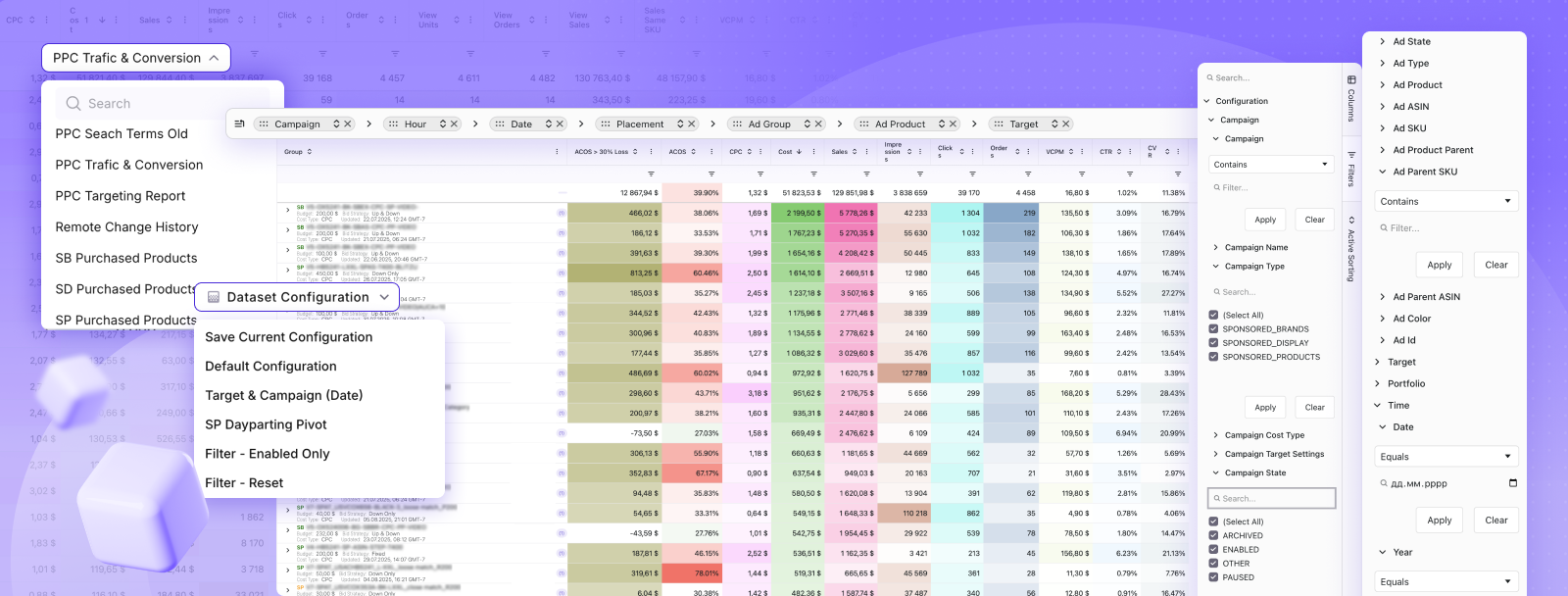
We don’t just help you run ads. We help you understand what’s actually driving performance – organic reach or paid traffic – and where your brand’s voice is getting traction. Our tools are designed to surface the signals that matter: when campaigns go off-brand, when budgets drift from strategy, or when product performance starts slipping through the cracks. That’s the kind of insight you need to keep your brand aligned, not just active.
From bulk campaign editing to placement-level performance, we give you a unified system to manage complexity without losing control. Brand growth doesn’t happen on autopilot, but with the right structure, you can scale without losing your identity. And that’s where we come in.
Final Takeaway
Brand management isn’t about creating a polished image and calling it a day. It’s an ongoing system of choices, strategies, and tools that help your business grow – clearly, consistently, and with purpose.
You don’t need a big team or a million-dollar budget to get it right. You need clarity on what your brand stands for, the discipline to stick with it, and the agility to adapt when the world changes.
Manage your brand with intention, and growth doesn’t just happen faster – it lasts longer.
FAQ
1. What’s the real difference between branding and brand management?
Branding is what you build – your logo, messaging, tone, and visual identity. Brand management is what keeps it all from drifting off course. It’s the ongoing process of making sure your brand stays consistent, relevant, and aligned with your goals as you grow. One is creation. The other is protection and evolution.
2. Is brand management just for big companies?
Not at all. In fact, small and growing businesses might need it even more. When you’re moving fast, launching new products, or working with limited resources, it’s easy to end up with an inconsistent brand. Having even a basic system in place for managing your brand can save you from confusion, wasted effort, and missed opportunities.
3. How do I know if my brand management is working?
Start by looking at consistency. Are your visuals, tone, and messaging aligned across channels? Then go deeper. Are people recognizing your brand? Coming back for more? Leaving positive reviews? Good brand management should show up in how people respond to your business – with trust, loyalty, and a clear understanding of what you’re about.
4. Do I really need brand guidelines if my team is small?
Yes, and probably more than you think. Guidelines don’t have to be complicated. Even a one-page doc that outlines your logo rules, tone of voice, and basic messaging can make a big difference. It saves time, reduces confusion, and keeps everyone pulling in the same direction as you grow.
5. What should I do if my brand feels outdated?
It might be time for a refresh, but that doesn’t mean throwing everything out. Look at what’s still working and what no longer reflects your values, audience, or market. A rebrand could mean adjusting your messaging, updating your design system, or simply tightening your strategy. Just make sure any changes stay true to the core of who you are.
Join the WisePPC Beta and Get Exclusive Access Benefits
WisePPC is now in beta — and we’re inviting a limited number of early users to join. As a beta tester, you'll get free access, lifetime perks, and a chance to help shape the product — from an Amazon Ads Verified Partner you can trust.
 No credit card required
Free in beta and free extra month free after release
25% off for life — limited beta offer
Access metrics Amazon Ads won’t show you
Be part of shaping the product with your feedback
No credit card required
Free in beta and free extra month free after release
25% off for life — limited beta offer
Access metrics Amazon Ads won’t show you
Be part of shaping the product with your feedback