EN
EN  ES
ES  FR
FR  DE
DE  IT
IT  KO
KO  JA
JA  ZH
ZH  AR
AR  PT
PT  TR
TR  PL
PL How to List and Sell Branded Products on Amazon

There’s more than one way to sell branded products on Amazon, and not all of them require owning a big-name label. You might be launching a brand of your own, working with a supplier, or reselling popular products you’ve sourced legally. The key is knowing which route fits your business and making sure you’re set up to avoid the usual headaches like approval issues or account flags.
In this guide, we’ll break down the different options, what each one involves, and how to start without getting stuck in red tape.
What Does “Branded” Mean on Amazon?
On Amazon, a branded product simply means it’s tied to a specific brand name. That might be your own private label or a well-known brand like Nike, Philips, or L’Oréal. These products typically have the brand name visible on the packaging or product itself.
Amazon treats branded products differently from generic or unbranded ones. You’ll often need extra documentation or approval to list them, especially if you’re not the brand owner.
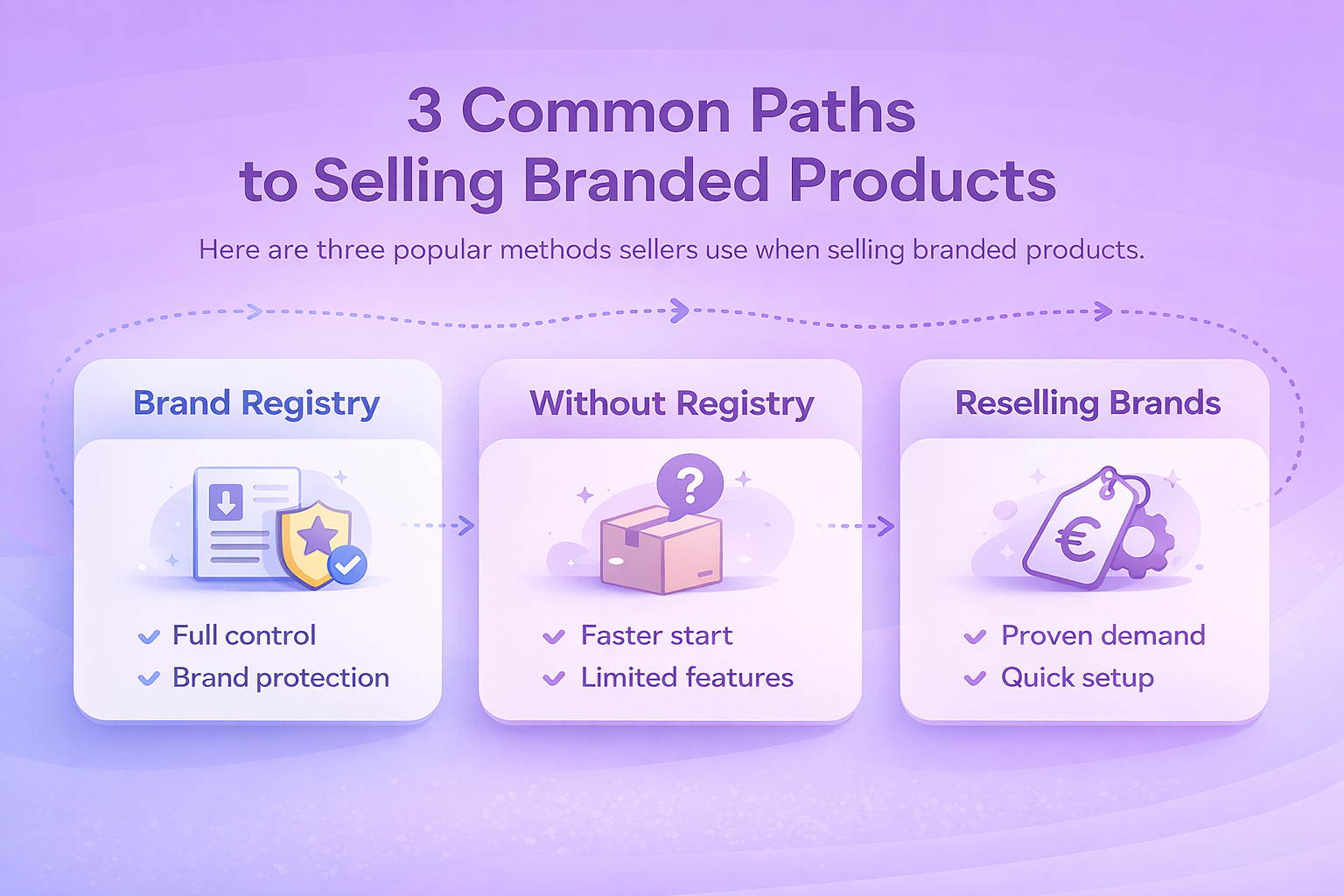
3 Common Paths on Selling Branded Products
There are three widespread methods sellers usually turn to. Each option has its own steps and limitations, so let’s walk through them one by one.
Option 1: Selling Your Own Brand Through Amazon Brand Registry
If you’re building a brand from the ground up and want full control over how your products appear and perform on Amazon, this is the most structured path. Brand Registry not only verifies your ownership, but also gives you tools to grow and protect your business in the long run.
What You Need
Before Amazon lets you list products under a registered brand, they expect a few essentials in place. You’ll need a trademark that matches your brand name, whether it’s already registered or filed through Amazon’s IP Accelerator.
Your product or its packaging also has to show that brand name in a permanent, clear way rather than a temporary sticker. And of course, everything starts with having a Professional Amazon Seller Account, since Brand Registry isn’t available on individual plans.
How to Enroll and List
Once your brand is ready, here’s how to get set up inside Seller Central:
- Apply for a trademark: It must match the brand name shown on your products or packaging.
- Join Brand Registry: Use your Seller Central login to create a Brand Registry account and complete enrollment.
- Create listings: During the listing process, select your registered brand name in the “Brand Name” field.
Pros
A few reasons why sellers choose this route when launching a new brand.
- Full control over listings and content.
- Better brand visibility with marketing tools.
- Protection from hijackers and unauthorized sellers.
What to Watch Out for
It’s worth knowing what you’re signing up for, especially if you’re still early in the branding process. Getting trademark approval can take months unless you go through Amazon’s IP Accelerator. And once you’re in, the responsibility for how your brand looks and performs falls entirely on you – from the product pages to the customer experience.
Option 2: Selling Your Brand Without Brand Registry
This route is for sellers who have a branded product but haven’t gone through the trademark process yet. You won’t have access to all of Amazon’s brand tools, but it’s still a legitimate way to get started and test the waters before fully committing to Brand Registry.
What You Need
Even if you don’t have a registered trademark yet, Amazon still expects a few basics before approving brand listings. You’ll need a product or its packaging that physically displays your brand name permanently (not just a temporary sticker), a Professional Seller Account, and to go through Amazon’s catalog authorization process. It’s not quite Brand Registry, but it’s still a formal step.
What to Expect
The listing flow is mostly the same, but you’ll likely run into a quick checkpoint:
- During listing, you’ll get an error code 5665 when entering your brand name.
- Click the link in the error and submit photos showing the product and brand name.
- If approved, you’ll be able to continue listing future products under that brand name.
Pros
Why some sellers start here before going all-in on trademarking:
- Faster to get started if you’re still working on a trademark.
- Allows you to begin building a product line.
Cons
If you skip Brand Registry for now, there are a few trade-offs to be aware of. You won’t get access to Amazon’s enhanced brand features like A+ Content or Brand Analytics, which can make a real difference in how your products perform.
Later on, if you decide to register your brand, merging existing listings under the new brand can be a hassle and usually requires help from Seller Support. And even without Registry, Amazon still expects your branding to be clearly visible on the actual product, not just the packaging.
Option 3: Reselling Branded Products from Other Companies
Not all Amazon sellers want to build a brand from scratch. If you’re more interested in reselling existing products from known brands, this route lets you tap into built-in demand. The tradeoff is tighter restrictions and higher expectations for compliance.
What You Need
To stay within Amazon’s rules when reselling branded products, you’ll need to show that your sourcing is legitimate. That means having proper invoices from an authorized distributor or directly from the brand, holding a Professional Seller Account, and getting brand approval if the product falls under Amazon’s gated categories. Without those pieces in place, your listing likely won’t go live.
How It Works
Once you’ve got the right paperwork, here’s how the process typically plays out:
- Search for the branded product in Seller Central.
- Select your condition and click “Apply to sell” if the item is gated.
- Submit invoices and any requested documentation for approval.
What Amazon Typically Requires
Approval requirements vary, but these are the most common requests:
- Invoices must match your seller name and address.
- A clear breakdown of products, quantities, and supplier info.
- Sometimes a brand authorization letter on company letterhead.
Pros
A few reasons sellers choose the reselling path instead of building a brand:
- Leverage existing brand trust and demand.
- Skip branding and manufacturing.
- Faster time to market.
Cons
This selling model is relatively easy to enter, but it does come with some real risks. You’ll often be competing with multiple other sellers listing the exact same product, which can lead to aggressive pricing and shrinking margins. And if your documentation isn’t airtight, you’re more likely to run into intellectual property complaints that could jeopardize your account.
What’s a Brand Authorization Letter?
This is a formal letter from a brand owner giving you permission to sell their products on Amazon. If Amazon requests one, it should include:
- Your full legal name and business address.
- The brand’s name, address, and official letterhead.
- A clear statement authorizing you to sell their products.
- A recent date.
- PDF format in high resolution.
Having this letter, along with valid invoices, is often enough to get approved to resell restricted brands.

How to Avoid Common Mistakes When Selling Branded Products
Selling branded products is completely allowed – as long as you play by Amazon’s rules. That said, it’s easy to hit roadblocks if you cut corners or don’t read the fine print.
Here are some real-world tips to help you avoid headaches:
Build Strong Supplier Relationships
Working with the right suppliers makes a big difference when you’re reselling branded products on Amazon. It’s never a great idea to rely on just one distributor – supply chains can shift, and you need a backup plan. From the start, ask whether they can issue invoices that meet Amazon’s requirements, especially if you’ll need to show proof later. Before placing large orders, always request samples so you can verify product quality firsthand. It’s easier to fix small issues early than to deal with negative reviews or returns later.
Pick Your Brands Carefully
Not every branded product is worth your time. Some listings are so tightly controlled by Amazon or the brand itself that there’s little room to compete. Focus on products that have a consistent sales history but aren’t overloaded with sellers. A manageable level of competition gives you room to price reasonably and still make a margin. Also, take a close look at the listing quality. Poorly optimized listings with bad images or weak descriptions might not convert well, even if the product itself is solid.
Protect Your Account Health
Your Amazon account is your business – treat it like one. Keep detailed records of all supplier invoices and authorization letters in case Amazon ever asks for documentation. Even if you use FBA, customer complaints still count against your performance metrics, so stay responsive and handle issues quickly. If your listing ever gets flagged or taken down, being able to respond fast with clear paperwork can be the difference between a temporary glitch and a serious suspension.
What to Do If You Hit a Wall
If Amazon rejects your brand application or denies your request to sell a gated product, don’t panic. Here’s what to try:
- Double-check your invoices: Do they have all the required details?
- Make sure your branding is actually printed or embossed – stickers don’t count.
- If needed, reach out to Amazon Seller Support with photos and explanations.
- Consider working with an agency if you’re scaling fast or running into repeated approval issues.
Powerful Analytics for Smarter Branded Product Selling
We built WisePPC to work with brands and sellers who want more than just a working ad campaign. If you’re selling branded products on Amazon, whether it’s your own trademarked line or inventory sourced from official distributors, what you really need is visibility. You want to know what’s actually performing, where your ad spend is going, and how your decisions are affecting both revenue and margin. That’s exactly what we’ve built WisePPC for.
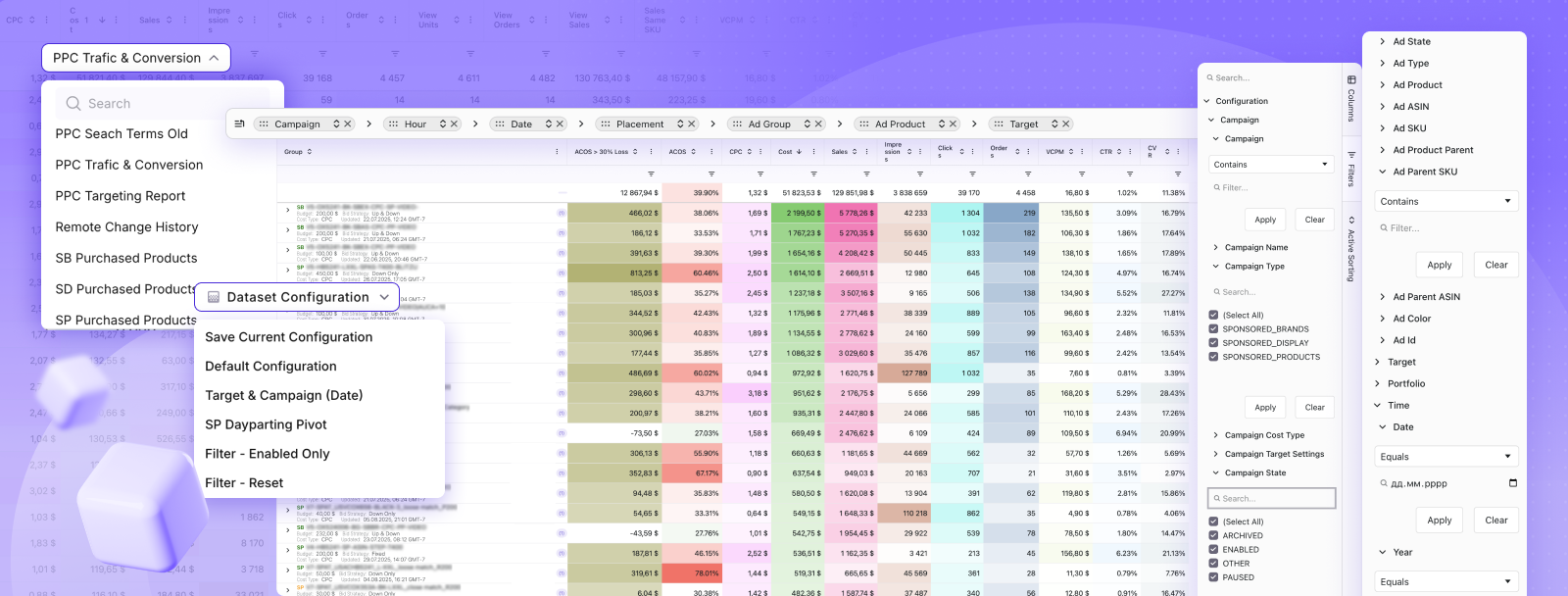
We’re an Amazon Ads Verified Partner, which means our platform taps directly into your Amazon data using official connections. Once you’re set up, you can track everything in one place: TACOS, ACOS, organic vs paid sales, campaign-level performance, and more. We give you real-time insights and historical trends going back years. That kind of depth is critical when you’re selling branded products, where every percentage point in spend efficiency counts.
We also make bulk campaign changes simple. You can filter down to the ad groups or targets you care about, adjust bids, pause low performers, and move quickly without digging through spreadsheets. If you’re listing branded products and trying to stay competitive without bleeding margin, this level of control can make a real difference.
Final Thoughts
There’s no one-size-fits-all approach to selling branded products on Amazon. Whether you’re starting your own brand or reselling others, the best path depends on your business goals, resources, and risk tolerance.
That said, the sellers who do well in this space usually have one thing in common: they stay organized. They know the documentation Amazon expects, they vet their suppliers, and they don’t list anything they can’t support if asked.
If you’re serious about getting into branded products, start slow, build trust with Amazon’s systems, and focus on long-term performance, not shortcuts.
FAQ
1. Do I need permission to sell branded products on Amazon?
It depends on the brand and the category. Some brands allow open reselling as long as you can prove the products are genuine. Others restrict who can list their items or require invoices from authorized distributors. Before you jump in, check whether the brand is gated, and make sure you can document where your inventory came from.
2. What does Amazon mean by brand gating?
Brand gating is Amazon’s way of protecting certain brands from counterfeit or unauthorized listings. If a brand is gated, you’ll need approval before you can sell it. That usually means providing invoices, supplier info, or paperwork that confirms you source the products legitimately. It’s a bit of a hurdle, but it also cuts down on competition.
3. Can I sell branded products without a trademark?
Yes, if you’re reselling existing brands. You only need a trademark if you’re creating a brand of your own and want access to things like Brand Registry or A+ Content. If you’re operating as a reseller, what matters more is the source of your products and whether you meet Amazon’s approval requirements.
4. What kind of documentation does Amazon usually ask for?
Invoices from your supplier are the big one. Amazon looks for recent invoices that show you purchased the items in a quantity that makes sense for resale. Sometimes they’ll also request business information or proof that your supplier is legit. The more transparent your supply chain is, the easier this process becomes.
5. How do I avoid problems with intellectual property claims?
Stick to authentic products and reliable suppliers. If you’re selling well-known brands, avoid anything that looks like grey-market stock or liquidation lots with unclear sourcing. Pay attention to brand policies too. Some companies don’t want their products sold online by unauthorized retailers and may file complaints if they find you.
6. Can I use the brand’s images and descriptions on my listing?
Usually yes, if you’re adding your offer to an existing listing. When you create a new listing for a branded product, it gets more complicated. Using the brand’s official content without permission can lead to copyright issues, so it’s always better to match your offer to an existing ASIN whenever possible.
7. Is advertising worth it when selling branded items?
It often is, but it depends on the competition and your margins. Branded products usually attract more sellers, which means more pressure on prices and visibility. Ads can help you hold your ground, especially when paired with a solid analytics tool that shows you what’s actually working. The key is to watch your numbers closely so you’re not spending your entire margin on clicks.
Join the WisePPC Beta and Get Exclusive Access Benefits
WisePPC is now in beta — and we’re inviting a limited number of early users to join. As a beta tester, you'll get free access, lifetime perks, and a chance to help shape the product — from an Amazon Ads Verified Partner you can trust.
 No credit card required
Free in beta and free extra month free after release
25% off for life — limited beta offer
Access metrics Amazon Ads won’t show you
Be part of shaping the product with your feedback
No credit card required
Free in beta and free extra month free after release
25% off for life — limited beta offer
Access metrics Amazon Ads won’t show you
Be part of shaping the product with your feedback