EN
EN  ES
ES  FR
FR  DE
DE  IT
IT  KO
KO  JA
JA  ZH
ZH  AR
AR  PT
PT  TR
TR  PL
PL Ecommerce Automation: 12 Tasks You Can Hand Off to Technology

Running an online store usually starts with excitement, but it doesn’t take long before the repetitive work piles up. Updating listings, checking stock, replying to questions, adjusting prices, sending order updates, trying to keep track of what’s selling and what isn’t – it can easily eat an entire day before you even look at bigger strategy work.
That’s where automation becomes less of a nice idea and more of a relief. With the right setup, many of the tasks you handle manually can run quietly in the background, giving you both time and cleaner workflows. Below is a breakdown of common ecommerce tasks you can automate, along with examples of tools inside the Amazon ecosystem that can help.

WisePPC: Automating the Insights and Decisions Behind Marketplace Growth
At WisePPC, we built our platform around one idea: most ecommerce teams spend too much time wrestling with data instead of using it. Manual reporting, scattered dashboards, and guesswork slow everything down. By automating analytics and key parts of campaign management, we help sellers move faster and understand their performance without digging through spreadsheets.
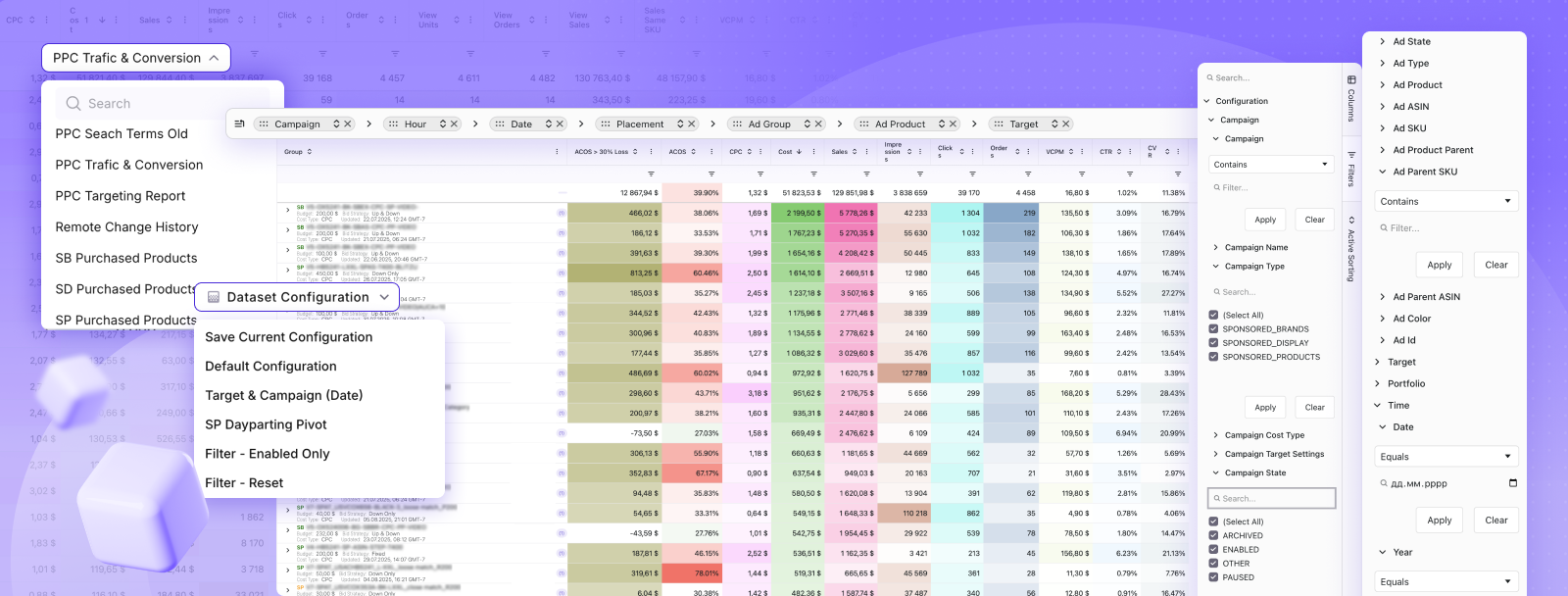
Our system pulls sales and advertising data into one place, refreshes it in real time, and highlights anything that needs attention. You can spot shifts in demand, review long-term trends, adjust bids or budgets in bulk, and see how ads influence organic sales. Instead of micromanaging campaigns, you get clear signals about opportunities, wasted spend, and areas worth scaling.
Automation is what makes the entire workflow feel lighter. We store years of historical data automatically, so seasonality and performance patterns are easy to track. Whether you manage a small catalog or thousands of SKUs, our goal is to handle the heavy analytical work behind the scenes so your team can focus on growth, not maintenance.
1. Generate Product Listing Content
Good product listings work like your digital storefront. Descriptions, titles, and attributes shape how customers understand what you sell. Writing everything from scratch, though, can be exhausting if you publish often.
If you sell in the Amazon store, you can use built-in generative AI tools to produce titles, descriptions, and even structured attributes from a few words or an image. You still guide the content, but the heavy lifting happens automatically.
2. Keep Prices Up to Date
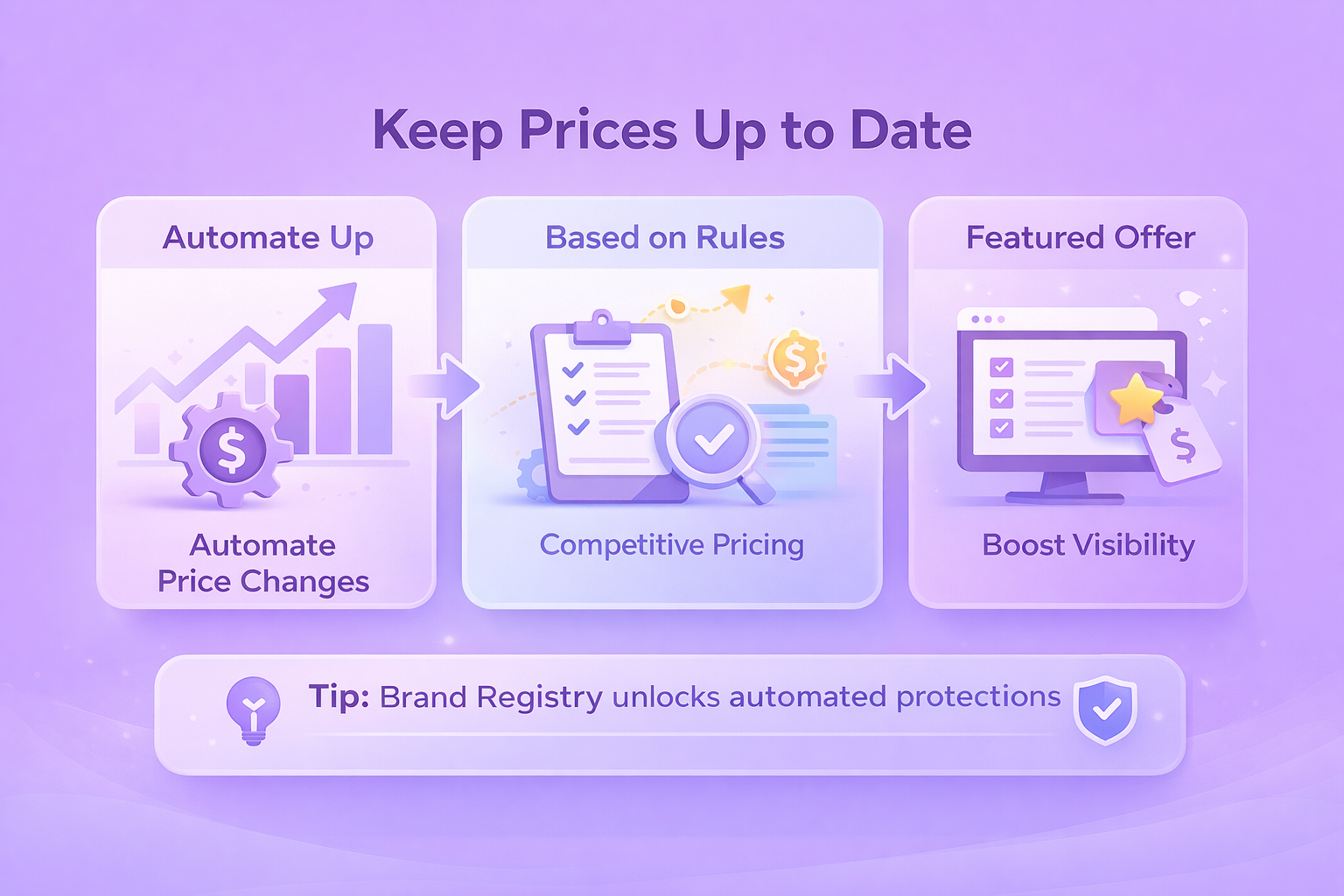
Manually tracking competitors and adjusting prices can pull your attention away from everything else. Automated pricing tools solve this by updating prices around the clock, based on rules you set.
Amazon’s Automate Pricing helps sellers keep listings competitive without constant monitoring, increasing the chances of appearing as the Featured Offer.
Tip: Brand Registry unlocks automated protections and additional tools if you’re building a brand inside the Amazon store.
3. Tighten Up Shipping and Delivery Times
Shipping often hides a lot of tiny decisions that slow teams down. If you fulfill your own Amazon orders, Shipping Settings Automation can calculate realistic transit times using your location, preferred carriers, and customer delivery zones. Thanks to more accurate delivery estimates, you avoid disappointing customers and guessing delivery windows.
4. Run Fulfillment Tasks Automatically
Order updates, label printing, customer notifications – these are all small but necessary steps. A simple automation system can send order confirmations, shipping notices, and delivery updates without you lifting a finger. It seems minor until you realize how much time it frees each day.
If you’d rather outsource fulfillment entirely, Fulfillment by Amazon (FBA) bundles packing, shipping, returns, and customer support into one service. It becomes even more powerful when used as part of Supply Chain by Amazon.

5. Keep an Eye on Inventory
Inventory management walks a fine line. Run out of stock and sales stop; overstock and storage costs climb. Automation helps spot low inventory and plan replenishment before issues appear. Amazon Warehousing and Distribution offers bulk storage and restocking support for sellers who want a smoother, low-cost way to stay stocked.
6. Bring Automation Into Your Marketing Workflows
Staying in touch with your audience takes effort. Email sequences, social posts, promos – they all need timing and consistency. A good marketing automation platform can segment audiences, send campaigns at the right moment, and keep communication steady without the daily manual hustle.
This applies to everything from newsletters to social ad reminders.
7. Improve Customer Service Without Slowing Down
A growing store means more questions to answer. AI chat tools and simple automated responses can step in to reply to common questions, guide customers, assist with returns, or confirm that support has received their message.
Even a warm auto-reply helps customers feel acknowledged until someone can dig into the full request.
8. Manage Customer Reviews More Efficiently
Reviews shape trust, and managing them manually becomes difficult as your catalog grows. Brands enrolled in Brand Registry can use the Customer Reviews tool to track lower-rated reviews quickly and send courtesy messages or requests for additional details using built-in templates.
The Voice of the Customer dashboard in Seller Central also helps highlight trends, potential product issues, and places where listings might need improvement.

9. Strengthen Your Risk Management
Fraud detection is one area where automation truly shines. AI tools can flag unusual orders, risky IP addresses, suspicious payment activity, and other signs of fraud before they become bigger problems.
Amazon sellers can also use Report a Violation to monitor potential misuse of trademarks, copyrights, or patents. Project Zero combines automated protections with serialization tools and lets eligible sellers remove counterfeit listings immediately.
10. Automate Your Advertising Work
Running ads by hand can become overwhelming as your catalog grows. Sponsored Products ads use a cost-per-click model to place products in relevant search results. You can pick keywords manually or let Amazon handle targeting based on your goals.
Brand Registry unlocks Sponsored Display, which uses machine learning to show ads across Amazon and a wider network of sites and apps.
Tip: If customers reorder the same items regularly, programs like Subscribe and Save can automate future purchases and give shoppers predictable discounts.
11. Get Clearer Insights Without Manual Reporting
Metrics like clicks, conversions, revenue, and cart-adds matter, but generating reports manually takes time. Automated reporting tools help surface trends early, highlight performance shifts, and reveal what’s working and what isn’t.
Brands enrolled in Brand Registry have access to Amazon Brand Analytics, a set of dashboards that explore customer search behavior and aggregated brand performance.
12. Automate Returns and Exchanges
Returns are an unavoidable part of ecommerce, but the back-and-forth can quickly drain time if every request needs manual attention. Many modern platforms let you automate the routine parts of the process so customers can resolve simple issues on their own.
Automation tools can generate prepaid return labels, update order statuses, and trigger refund workflows without you stepping in. If you sell in the Amazon store, built-in return settings allow eligible orders to go through an automated approval process. Customers get instructions instantly, and you stay focused on more important tasks instead of emailing label PDFs all day.
When set up correctly, automated returns don’t just save time. They also reduce friction for customers who just want a straightforward solution.

Bringing Automation Into Your Daily Workflow
Once you start automating more of your operations, the next step is weaving those tools into your everyday routine so they actually support the way you work. Most sellers don’t need a complete overhaul. A few small adjustments usually make a noticeable difference, especially when you’re trying to keep processes consistent without adding more noise to your day.
Here are a few practical habits that help automation run smoothly:
- Review automated alerts once or twice a week instead of checking data constantly.
- Decide which tasks belong to software and which still need a human decision, so your team isn’t duplicating work.
- Update automation rules every so often, especially when your product line, pricing, or advertising strategy changes.
- Keep a simple internal note or shared doc that outlines what is automated, so everyone stays aligned.
- Use dashboards that highlight anomalies or slowdowns, not ones that force you to dig for information.
It helps to think about automation as something that grows with your business rather than a one-time setup. As your catalog expands and your data becomes more complex, refreshing your rules and dashboards keeps everything sharp. The goal isn’t to replace your judgment – it’s to give you cleaner signals so every decision feels a little easier and a lot faster.
Conclusion
The real value of ecommerce automation shows up in the day-to-day rhythm of your work. Tasks that used to slow you down start running quietly in the background, decisions come a little faster, and your team finally has space to focus on ideas instead of maintenance. Whether you’re improving product listings, tightening up fulfillment, refining your ad strategy, or tracking performance with tools like WisePPC, each layer of automation removes a bit of friction.
No system replaces your judgment, but the right automations give you cleaner signals and more time to act on them. And that’s ultimately how ecommerce businesses grow – not by working longer hours, but by freeing up the hours that matter. Once you see how much smoother operations can feel, it becomes easier to expand, experiment, and build processes that actually scale with you.
Frequently Asked Questions
What exactly counts as ecommerce automation?
Ecommerce automation is any tool or system that takes over a task you’d normally do by hand. That can be something simple, like sending order updates automatically, or something more involved, like adjusting ad bids, predicting inventory needs, or analyzing performance without you digging through reports.
Do small sellers actually need automation, or is it more for larger teams?
Smaller sellers often feel the benefits first. When you’re running everything yourself, even a few automated tasks can free up hours. Larger teams usually adopt automation to keep processes clean and avoid mistakes as complexity grows.
How much time does automation really save?
It depends on how many tasks you hand off, but most sellers notice reduced manual work within the first week. Pricing checks, data analysis, campaign updates, and customer notifications tend to save the most time because they happen so often.
Is it difficult to set up automation tools?
Most modern tools are designed to be straightforward. Many come with templates or default settings you can adjust. You don’t need to build scripts or know how to code unless you’re creating something highly custom.
Can automation replace a full team?
No. Automation handles repetition and pattern-based decisions, but it doesn’t replace strategic thinking, creative work, or customer understanding. The real goal is to free your team from busywork so they can focus on the parts of the business that actually move revenue.
Join the WisePPC Beta and Get Exclusive Access Benefits
WisePPC is now in beta — and we’re inviting a limited number of early users to join. As a beta tester, you'll get free access, lifetime perks, and a chance to help shape the product — from an Amazon Ads Verified Partner you can trust.
 No credit card required
Free in beta and free extra month free after release
25% off for life — limited beta offer
Access metrics Amazon Ads won’t show you
Be part of shaping the product with your feedback
No credit card required
Free in beta and free extra month free after release
25% off for life — limited beta offer
Access metrics Amazon Ads won’t show you
Be part of shaping the product with your feedback