ID
ID  EN
EN  ES
ES  FR
FR  DE
DE  IT
IT  KO
KO  JA
JA  ZH
ZH  AR
AR  PT
PT  TR
TR  PL
PL  VI
VI Best Selling Products on Amazon USA in 2026

Ringkasan Singkat: Amazon’s best-selling products in the USA span multiple categories, with electronics, beauty and personal care, and home and kitchen items consistently topping the charts. According to official Amazon data, independent sellers averaged over $290,000 in annual sales in 2024, with beauty and personal care alongside home and kitchen ranking as the most profitable categories. The most successful products typically solve everyday problems, offer strong value, and maintain high customer ratings.
Amazon continues to dominate the retail landscape in 2026. With the United States representing Amazon’s largest market at 489.7 billion U.S. dollars in net sales in 2025, understanding what actually sells on the platform matters more than ever.
The competition between retail giants has intensified. According to Darden School research, with Amazon’s 2024 revenue at $638 billion compared to Walmart’s $681 billion, if sales trends continue, Amazon could overtake Walmart as the largest domestic retailer by revenue.
But here’s the thing — knowing which products consistently rank as best-sellers gives both shoppers and sellers valuable insights into market trends, consumer preferences, and what Americans are actually buying right now.
What Makes a Product a Best-Seller on Amazon
Not every product that lands on Amazon becomes a best-seller. Several factors determine which items rise to the top.
Customer ratings play a massive role. Products with consistent five-star reviews tend to dominate their categories. However, research from UCLA Anderson School of Management reveals a concerning trend: fake reviews significantly distort markets. Sellers who purchase fake reviews saw unit sales rise an average of 27.2% while also raising prices, creating an uneven playing field.
Price point matters too. The most successful products typically offer strong value relative to competitors. They don’t necessarily need to be the cheapest option, but customers need to perceive they’re getting their money’s worth.
Problem-solving capability ranks high. Products that address everyday frustrations or make life noticeably easier tend to generate repeat purchases and word-of-mouth recommendations.
The buybox algorithm also influences sales dramatically. Research from Wharton shows that when a marketplace introduced a buybox, conversion rates increased by 23% and transaction volume jumped by 78%. Getting featured in that default “Add to Cart” position can make or break a product’s success.
Top-Selling Categories on Amazon USA
Amazon organizes millions of products into distinct categories. Some consistently outperform others in terms of sales volume and seller profitability.
According to a 2024 survey of more than 2,000 Amazon sellers from 100 countries, two product categories ranked as the most profitable for sellers worldwide: beauty and personal care, along with home and kitchen. These categories consistently generate the highest returns for sellers while maintaining strong customer demand.
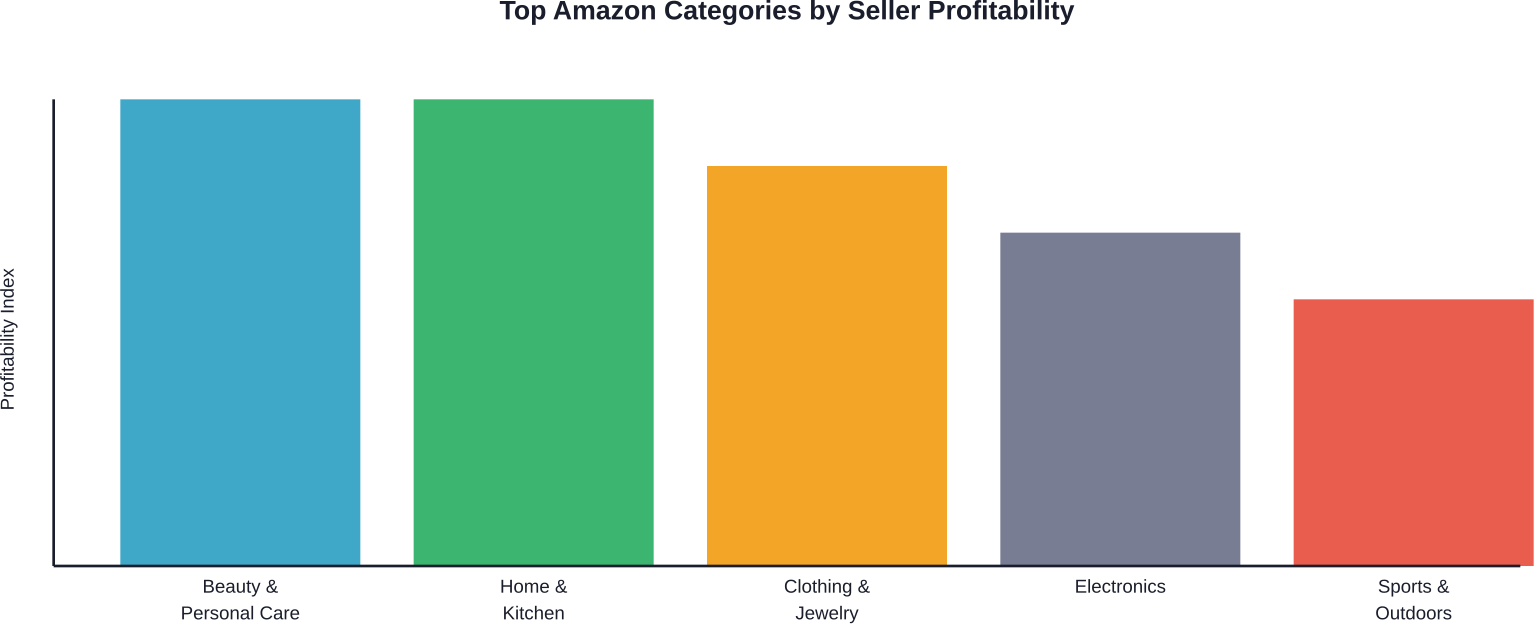
Clothing, shoes, and jewelry followed closely behind in profitability rankings. The fashion category benefits from repeat customers and seasonal buying patterns that keep sales steady throughout the year.
Elektronik dan Aksesori
Electronics consistently rank among Amazon’s top-selling categories. Cell phone accessories, computers, and video game products generate substantial sales volume.
Popular items in this category include charging cables, portable chargers, and protective cases. The INIU 10000mAh Portable Charger regularly appears on best-seller lists, offering a practical solution for keeping devices powered throughout the day.
Apple AirTags have become customer favorites for tracking luggage and keys. When available at discounted prices — such as $15 each in a four-pack — they represent compelling value for shoppers concerned about lost items.
Kecantikan dan Perawatan Pribadi
The beauty category shows remarkable consistency in sales performance. Products that deliver visible results at reasonable prices tend to dominate.
COSRX Snail Mucin 96 Power Repairing Essence exemplifies the type of product that succeeds here. It offers a unique ingredient at an accessible price point, backed by thousands of positive customer reviews.
Teeth whitening products maintain strong sales year-round. Crest 3D Whitestrips remain a perennial best-seller, providing professional-level whitening at a fraction of dental office prices.
Kebutuhan Rumah dan Dapur
Home and kitchen items represent one of Amazon’s largest and most profitable categories. These products often solve everyday problems and get used repeatedly, leading to strong customer satisfaction.
Storage containers like Rubbermaid Brilliance Food Storage Containers sell consistently well. They’re dishwasher-safe, stackable, and address the universal need for food organization.
Small appliances also perform strongly. The Crock-Pot 7-Quart Oval Manual Slow Cooker appeals to busy households looking for convenient meal preparation options.
Kitchen tools that simplify food prep consistently rank high. The Fullstar 4-in-1 Vegetable Chopper and Spiralizer combines multiple functions in one tool, saving both money and storage space.
Produk Kesehatan dan Rumah Tangga
Health-focused products have maintained strong momentum. Supplements, vitamins, and wellness items continue attracting health-conscious consumers.
Household cleaning supplies also fall into this category. The Bissell Little Green Mini Portable Carpet Cleaner addresses specific cleaning challenges that traditional vacuums can’t handle, making it a problem-solving purchase rather than a commodity item.
Trending Products Driving Sales in 2026
Certain product types are experiencing particularly strong growth right now. Identifying these trends helps explain current best-seller lists.
According to the National Retail Federation, retail sales in November and December 2025 were predicted to grow between 3.7% and 4.2% over 2024, translating to total spending between $1.01 trillion and $1.02 trillion. This forecast reflected sustained consumer spending power despite economic uncertainties.
Comfort and Wellness Items
Products promoting comfort and self-care show no signs of slowing down. Bronax Cloud Slippers for women and men exemplify this trend — soft, affordable footwear that makes home time more comfortable.
Bedding and bath items also see consistent demand. The Bedsure Blanket and Mellanni Queen Sheets regularly appear on best-seller lists, offering quality materials at competitive prices.
Bath accessories like the Gorilla Grip Bath Rug combine functionality with comfort, preventing slips while providing a soft surface.
Organization and Storage Solutions
Organization products continue trending upward. The Bagsmart Travel Jewelry Organizer Case addresses the specific need for keeping jewelry tangle-free while traveling.
Storage solutions that maximize space efficiency appeal to apartment dwellers and anyone dealing with limited square footage. Products that stack, nest, or fold flat when not in use tend to outperform single-purpose alternatives.
Smart Home and Tech Accessories
Technology products that integrate with existing devices maintain strong sales. Wall chargers with multiple ports, like the QINLIANF Wall Charger, meet the reality that most households now have numerous devices requiring simultaneous charging.
Smart home compatibility increasingly influences purchasing decisions. Products that work with Alexa, Google Assistant, or Apple HomeKit get preference over standalone alternatives.
E-Commerce Growth and Market Dynamics
Understanding broader e-commerce trends provides context for Amazon’s best-seller patterns.
According to the U.S. Census Bureau, total retail sales for the fourth quarter of 2025 were estimated at $1,900.5 billion, an increase of 0.4 percent from the third quarter of 2025. More significantly, the fourth quarter 2025 e-commerce estimate increased 5.3 percent (±1.8%) from the fourth quarter of 2024 while total retail sales increased 2.7 percent (±0.5%) in the same period.
This disparity shows online shopping continues gaining market share from traditional retail. E-commerce growth consistently outpaces overall retail growth, reinforcing Amazon’s positioning.
The Census Bureau also reported that sales for December 2025 through February 2026 were up 3.1% from the same period a year ago, indicating sustained consumer spending.

According to U.S. Census Bureau data on revenue and employment trends, the Electronic Shopping and Mail-Order Houses industry grew by $546.7 billion between 2017 and 2022—a 106.0% increase. Employment in this industry grew by more than 1.2 million workers, a 215.3% gain, primarily from nonstore retail like web retailers.
These numbers illustrate the structural shift toward online retail that benefits Amazon and creates opportunities for third-party sellers on the platform.
What Sellers Need to Know About High-Demand Products
For those considering selling on Amazon, understanding high-demand products matters just as much as knowing what’s popular with shoppers.
Independent sellers in the US averaged more than $290,000 in annual sales in the Amazon store in 2024, according to official Amazon data. That’s a substantial income stream for successful sellers who identify the right products.
But here’s where it gets interesting — product selection alone doesn’t guarantee success. Third-party seller services generated significant value for Amazon, reaching billions in quarterly revenue through 2025. This means competition remains fierce, and sellers need strategic advantages beyond just picking popular categories.
Identifying Product Opportunities
Several strategies help sellers identify promising products before markets become saturated.
Monitoring Amazon’s Best Sellers lists provides real-time data on what’s moving. These lists update hourly, offering current insights into consumer behavior.
Seasonal trends create predictable opportunities. Garden tools like Grampa’s Weeder see sales spikes in spring. Holiday decorations, winter apparel, and specific gift items follow annual patterns that savvy sellers can anticipate.
Problem-solving products often face less competition than commodity items. A specialized kitchen tool that addresses a specific frustration competes differently than generic spatulas.
Profitability Versus Volume
Not all best-selling products make good business opportunities for sellers. Volume matters, but profit margins matter more.
| Kategori | Margin Khas | Tingkat Kompetisi | Seasonal Variation |
|---|---|---|---|
| Kecantikan dan Perawatan Pribadi | Tinggi | Sedang | Rendah |
| Rumah dan Dapur | Tinggi | Tinggi | Sedang |
| Clothing and Jewelry | Moderate-High | Sangat Tinggi | Tinggi |
| Elektronik | Low-Moderate | Sangat Tinggi | Sedang |
| Mainan dan Permainan | Sedang | Tinggi | Sangat Tinggi |
| Perlengkapan Hewan Peliharaan | Moderate-High | Sedang | Rendah |
Beauty and personal care products offer strong margins with manageable competition, explaining why this category ranks highest for seller profitability. Electronics might sell in high volumes, but lower margins and intense competition squeeze seller profits.

Turn Best-Selling Products Into Profitable Campaigns
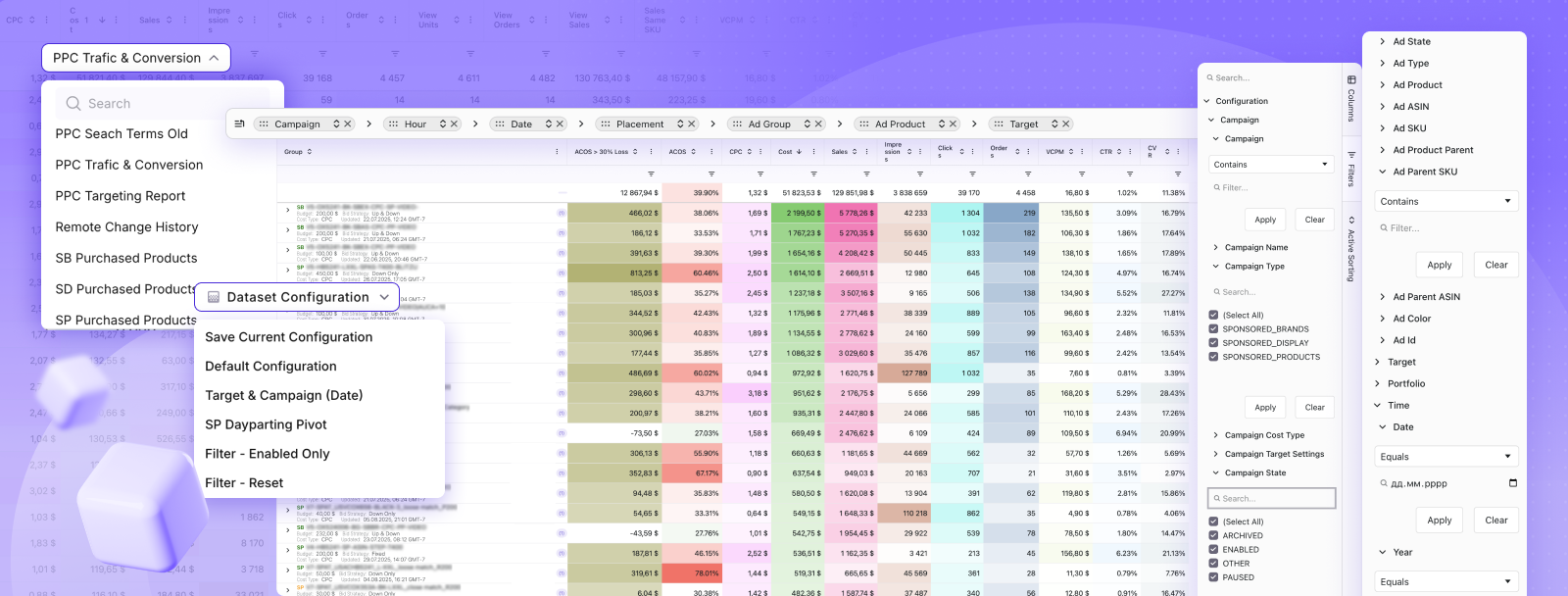
Best-selling products on Amazon already have demand, but once ads are involved, it’s not always clear which ones are actually generating profit. Some listings scale well, others just absorb budget without strong returns. WisePPC helps you see that difference by bringing ads, sales, and performance data into one place.
With a clearer view, you can quickly identify which campaigns drive real results, which keywords convert, and where spend should be reduced. It also makes it easier to adjust multiple campaigns at once and track performance over time without relying on manual reports. That way, you focus on products that scale efficiently instead of spreading budget across everything.
Register with WisePPC and take control of how your best-selling products generate revenue.
Specific Best-Selling Products Worth Noting
Looking at specific products provides concrete examples of what succeeds on Amazon and why.
Kitchen and Dining Tools
The Lavatools Javelin PRO Duo Instant Meat Thermometer represents a successful product type: specialized tools that serious home cooks will pay premium prices for. It’s not the cheapest thermometer available, but it’s accurate, fast, and durable.
Multi-functional tools consistently outperform single-purpose alternatives. Vegetable choppers that also spiralize, slice, and dice eliminate the need for multiple gadgets while saving drawer space.
Appliances
Small appliances that save time or energy perform well. Slow cookers, air fryers, and electric pressure cookers appeal to time-strapped households looking for convenient cooking methods.
The key differentiator often comes down to reliability and ease of cleaning. Appliances with dishwasher-safe components and simple controls get better reviews and higher repeat purchase rates.
Personal Care and Grooming
Hair care products with proven results drive consistent sales. Items that address specific concerns — frizz control, volume enhancement, or damage repair — outperform generic alternatives.
Skincare products featuring trending ingredients like snail mucin, retinol, or hyaluronic acid capitalize on both product efficacy and consumer awareness of these components.
Olahraga dan Luar Ruangan
Fitness accessories that support home workouts maintain strong demand. Resistance bands, yoga mats, and foam rollers sell year-round, with predictable increases in January when New Year’s resolutions drive purchases.
Outdoor gear that enhances specific activities — camping, hiking, fishing — attracts passionate enthusiasts willing to invest in quality equipment.
Produk Bayi
Baby items benefit from predictable replacement cycles and parents’ willingness to prioritize quality and safety. Diapers, wipes, feeding supplies, and clothing see consistent demand.
Products that simplify parenting tasks or solve common frustrations — like diaper bags with numerous organizational pockets or bottle warmers that work quickly — generate strong word-of-mouth recommendations.
Perlengkapan Hewan Peliharaan
Pet owners represent a loyal customer base willing to spend on their animals’ comfort and health. Food, treats, toys, and grooming supplies all perform well.
Subscription potential exists in this category too. Items like pet food, litter, and treats lend themselves to recurring purchases through Amazon’s Subscribe & Save program, benefiting both customers and sellers.
How Amazon’s Platform Influences Best-Sellers
Amazon’s marketplace structure significantly impacts which products become best-sellers.
According to Wharton research on buybox algorithms, the curation of multiple listings into a single default option dramatically affects sales. When customers see a “featured” option, conversion rates jump substantially compared to forcing customers to compare multiple identical listings.
Prime eligibility creates another layer of competitive advantage. Products eligible for free two-day shipping convert at higher rates than non-Prime alternatives, even when prices are identical.
The “Frequently Bought Together” and “Customers Also Bought” features drive additional sales for complementary products. A best-selling phone case might boost sales for screen protectors or charging cables simply through algorithmic association.
The Review Ecosystem Challenge
Customer reviews heavily influence purchasing decisions on Amazon. However, the review ecosystem faces integrity challenges.
UCLA Anderson research found that consumers understand fake reviews exist but struggle to distinguish authentic feedback from purchased praise. Shoppers’ imperfect understanding of this problem leads to suboptimal buying decisions.
The same research revealed that fake reviews work tremendously well for the sellers who buy them — those sellers raised prices and saw unit sales rise an average 27.2%. Meanwhile, honest sellers surrendered market share and profits to lower-quality products buoyed by fraudulent reviews.
This creates an unfortunate dynamic where maintaining authentic reviews while competing against sellers using fake feedback requires patience and genuine product quality.
Regional Considerations Within the USA
While Amazon serves the entire United States, regional preferences do influence best-seller lists.
Climate affects product demand significantly. Winter apparel, snow removal tools, and heating accessories sell better in northern states. Conversely, air conditioning units, pool supplies, and sun protection products see higher demand in southern regions.
Urban versus rural differences matter too. Apartment-friendly furniture, space-saving storage solutions, and noise-canceling headphones appeal more to city dwellers. Rural customers show stronger demand for outdoor equipment, larger appliances, and automotive tools.
These regional variations mean that a product might rank as a best-seller nationally while showing concentrated demand in specific geographic areas.
The Competitive Landscape: Amazon Versus Other Retailers
Amazon doesn’t operate in isolation. Competition from other retailers influences what products succeed on the platform.
According to the National Retail Federation’s 2025 Top 50 Global Retailers list, Walmart maintains the top position, followed by Amazon, Schwarz Group, Aldi, and Costco. Competition among these giants affects pricing strategies, product selection, and customer expectations.
NRF research on big box and mass merchants notes that Walmart continues leading through store refreshes and expanded online offerings. The competition pushes Amazon to maintain competitive pricing and selection breadth.
Club store formats like Costco also compete for customer wallet share. The NRF analysis of club stores notes these retailers appeal to the global middle class through bulk pricing and the “case or eaches” selling model, creating pressure on Amazon’s pricing in certain categories.
Where Amazon Maintains Advantages
Despite competition, Amazon holds distinct advantages that explain its continued growth.
Selection breadth remains unmatched. With over 1 million third-party sellers in the United States alone according to Wharton research, Amazon offers product variety that physical retailers can’t replicate.
Convenience factors heavily into customer preference. The ability to compare products, read reviews, and complete purchases within minutes from any device creates friction that traditional retail can’t fully overcome.
The Prime ecosystem builds customer loyalty. Once households commit to Prime membership, they naturally shift more purchases to Amazon to maximize the subscription value.
Looking Ahead: Retail Trends Shaping 2026
Several trends will likely influence Amazon’s best-seller landscape throughout 2026.
According to NRF’s predictions for retail in 2026, understanding customer priorities to create resonant shopping journeys will separate winners from also-rans. Retailers need to grasp not just what customers buy, but why they buy it and how they prefer to shop.
Gartner projects that by the end of 2026, 40% of enterprise applications will include task-specific AI agents, with agentic AI potentially generating nearly 30% of enterprise application software revenue by 2035. For retail, this means more sophisticated product recommendations, better inventory management, and enhanced customer service capabilities.
The integration of AI into shopping experiences could significantly alter best-seller dynamics. Products optimized for AI-driven recommendations might gain advantages over alternatives that haven’t adapted to algorithmic curation.
Sustainability and Ethical Considerations
Consumer preferences increasingly factor in environmental and ethical considerations. Products with sustainable packaging, ethical sourcing, or climate-friendly shipping options appeal to growing segments of environmentally conscious shoppers.
Amazon’s Climate Pledge Friendly program highlights products meeting sustainability certifications. Items with these badges often see conversion rate improvements as shoppers actively seek environmentally responsible options.
Supply Chain Resilience
According to NRF analysis, warfare in the Red Sea and drought in the Panama Canal created supply chain challenges that affected product availability and pricing. Retailers who front-loaded orders for seasonal merchandise often created inventory bottlenecks.
These dynamics favor products manufactured domestically or from reliable supply chains. Sellers who maintain consistent availability during supply disruptions gain customer loyalty that persists beyond the immediate crisis.
Practical Tips for Shoppers
For consumers rather than sellers, knowing how to navigate Amazon’s best-sellers improves purchasing decisions.
Don’t Assume Best-Seller Means Best Quality
Best-seller status indicates popularity, not necessarily superiority. A product might sell well due to aggressive marketing, fake reviews, or simply being the default choice many buyers select without extensive research.
Always read recent reviews carefully. Look for detailed feedback from verified purchasers who describe specific use cases. Generic five-star reviews with minimal detail warrant skepticism.
Compare Beyond Amazon
While Amazon’s prices often compete favorably, checking manufacturer websites, specialty retailers, or other marketplaces sometimes reveals better deals or more recent product versions.
Some brands maintain stricter quality control or better warranty support when purchases come directly from their official channels rather than through marketplace sellers.
Watch for Lightning Deals and Sales Events
Many best-selling products cycle through promotional pricing. Amazon’s Big Spring Sale and other seasonal events often discount popular items significantly.
Using price tracking tools or browser extensions helps identify when best-sellers hit their lowest prices, maximizing value for patient shoppers.
Consider Subscribe and Save
Consumable best-sellers like vitamins, pet food, or household supplies often cost less through Subscribe & Save programs. The convenience of automatic delivery also prevents running out of frequently used items.
Category-Specific Best-Seller Insights
Different categories exhibit distinct best-seller characteristics worth understanding.
Peralatan dan Perbaikan Rumah
Tool purchases often reflect specific project needs rather than impulse buying. Best-sellers in this category tend to be versatile items useful across multiple applications.
Quality matters more than price for serious DIY enthusiasts. A moderately priced tool that lasts for years outperforms a cheap alternative requiring frequent replacement.
Musical Instruments and Accessories
Entry-level instruments and accessories dominate best-seller lists as beginners outnumber professionals. Guitar strings, picks, drumsticks, and basic instruments see consistent demand.
Instructional materials and practice aids also sell well as newcomers invest in learning their chosen instruments.
Video Game
New releases and popular franchises drive initial sales spikes, but evergreen titles like Mario Kart or Minecraft maintain steady long-term sales.
Gaming accessories — controllers, headsets, charging docks — benefit from the large installed base of console and PC gamers who upgrade or replace equipment regularly.
Computers and Accessories
Accessories outsell computers themselves on Amazon. Keyboards, mice, monitors, cables, and storage devices address ongoing needs rather than one-time computer purchases.
Work-from-home trends boosted demand for webcams, microphones, and ergonomic accessories. These products remain popular as hybrid work arrangements persist.

Common Misconceptions About Best-Sellers
Several myths about Amazon best-sellers deserve debunking:
- Myth: Best-sellers are always the highest quality option.
- Reality: Best-seller status reflects current sales velocity, which can result from aggressive marketing, pricing strategies, or simply being the most visible default choice. Quality products sometimes rank lower because they serve niche markets or lack marketing budgets.
- Myth: All reviews are equally trustworthy.
- Reality: As UCLA Anderson research demonstrated, fake reviews significantly distort product perceptions. Generic praise without specific details often indicates purchased reviews rather than authentic customer experiences.
- Myth: Best-selling products make the best business opportunities.
- Reality: High-visibility products attract intense competition that can erode profit margins. Sometimes mid-tier products in less competitive subcategories offer better profitability for sellers.
- Myth: Amazon always has the lowest prices.
- Reality: While Amazon’s prices compete well overall, manufacturer websites, specialty retailers, and seasonal sales at other stores sometimes beat Amazon’s pricing, especially for premium or niche products.
Pertanyaan yang Sering Diajukan
What are the most profitable product categories for Amazon sellers?
According to 2024 seller surveys, beauty and personal care along with home and kitchen rank as the most profitable categories worldwide. These categories offer strong margins with manageable competition levels. Clothing, shoes, and jewelry followed closely in profitability rankings. Pet supplies also show strong margins with moderate competition and low seasonal variation.
How much do successful Amazon sellers actually earn?
Independent sellers in the US averaged more than $290,000 in annual sales in the Amazon store in 2024, based on official Amazon data. However, sales don’t equal profit — sellers must account for product costs, Amazon fees, shipping expenses, and marketing investments. Actual profit margins vary significantly by category and business model.
Can you trust Amazon best-seller rankings?
Best-seller rankings accurately reflect current sales velocity and update hourly. However, they don’t necessarily indicate the highest quality product in a category. Rankings can be influenced by pricing promotions, seasonal demand spikes, marketing campaigns, and unfortunately sometimes by fake reviews. Use best-seller status as one data point among several when making purchase decisions.
What products consistently sell well on Amazon year-round?
Consumable products like vitamins, pet food, and household supplies maintain steady demand regardless of season. Basic home essentials like storage containers, bedding, and cleaning supplies also sell consistently. Electronics accessories including charging cables, phone cases, and batteries generate reliable sales throughout the year. Beauty and personal care items show particularly stable demand patterns.
How do fake reviews affect Amazon’s best-sellers?
UCLA Anderson research found that sellers purchasing fake reviews saw unit sales rise an average 27.2% while also raising prices. This creates market distortion where lower-quality products with fraudulent reviews outperform honest competitors. Consumers struggle to distinguish fake reviews from authentic feedback, leading to suboptimal purchasing decisions. Amazon continues working to identify and remove fake reviews, but the problem persists.
Is Amazon’s market share still growing compared to traditional retail?
Yes, significantly. U.S. Census Bureau data shows that fourth quarter 2025 e-commerce sales increased 5.3% year-over-year, while total retail sales grew just 2.7%. The Electronic Shopping and Mail-Order Houses industry grew by $546.7 billion (106.0%) between 2017 and 2022. With Amazon’s 2024 revenue at $638 billion compared to Walmart’s $681 billion, if current trends continue, Amazon could overtake Walmart as the largest domestic retailer by revenue.
What makes a product become a best-seller on Amazon?
Several factors contribute: solving a common problem effectively, competitive pricing relative to alternatives, strong customer reviews and ratings, Prime eligibility for fast shipping, effective product photography and descriptions, and strategic placement in Amazon’s search results and recommendation algorithms. Wharton research shows that buybox placement alone can increase conversion rates by 23% and transaction volume by 78%.
Kesimpulan
Amazon’s best-selling products in the USA reflect broader consumer trends while creating opportunities for both shoppers and sellers. With the United States representing Amazon’s largest market at 489.7 billion U.S. dollars in net sales in 2025, understanding what drives best-seller status provides valuable insights.
Electronics, beauty and personal care, and home and kitchen categories consistently dominate sales rankings. These categories combine everyday utility with strong profit margins and manageable competition levels for sellers.
E-commerce continues outpacing traditional retail growth significantly, with online sales increasing 5.3% in Q4 2025 compared to just 2.7% for total retail. This structural shift reinforces Amazon’s market position and creates sustained opportunities in the online marketplace.
For shoppers, best-seller status provides useful information but shouldn’t be the sole purchasing criterion. Reading detailed reviews from verified purchasers, comparing prices across retailers, and understanding personal needs matter more than simply buying whatever ranks highest.
For sellers, the data is clear: independent sellers averaged over $290,000 in annual sales in 2024. But success requires strategic product selection, competitive pricing, authentic customer service, and patience to build genuine reviews rather than purchasing fake feedback.
Looking ahead, AI integration, sustainability considerations, and supply chain resilience will increasingly influence which products succeed. Those who adapt to these evolving priorities while maintaining focus on solving customer problems effectively will likely lead the next generation of Amazon best-sellers.
Whether shopping for household essentials or building an e-commerce business, understanding Amazon’s best-seller dynamics provides a competitive advantage in the world’s largest online marketplace.
Bergabunglah dengan WisePPC Beta dan Dapatkan Manfaat Akses Eksklusif
WisePPC sekarang dalam versi beta - dan kami mengundang sejumlah pengguna awal untuk bergabung. Sebagai penguji beta, Anda akan mendapatkan akses gratis, fasilitas seumur hidup, dan kesempatan untuk membantu membentuk produk - mulai dari Mitra Terverifikasi Iklan Amazon yang dapat Anda percayai.
 Tidak memerlukan kartu kredit
Gratis dalam versi beta dan gratis satu bulan ekstra setelah rilis
25% gratis seumur hidup - penawaran beta terbatas
Metrik akses yang tidak akan ditampilkan oleh Iklan Amazon
Jadilah bagian dari pembentukan produk dengan umpan balik Anda
Tidak memerlukan kartu kredit
Gratis dalam versi beta dan gratis satu bulan ekstra setelah rilis
25% gratis seumur hidup - penawaran beta terbatas
Metrik akses yang tidak akan ditampilkan oleh Iklan Amazon
Jadilah bagian dari pembentukan produk dengan umpan balik Anda